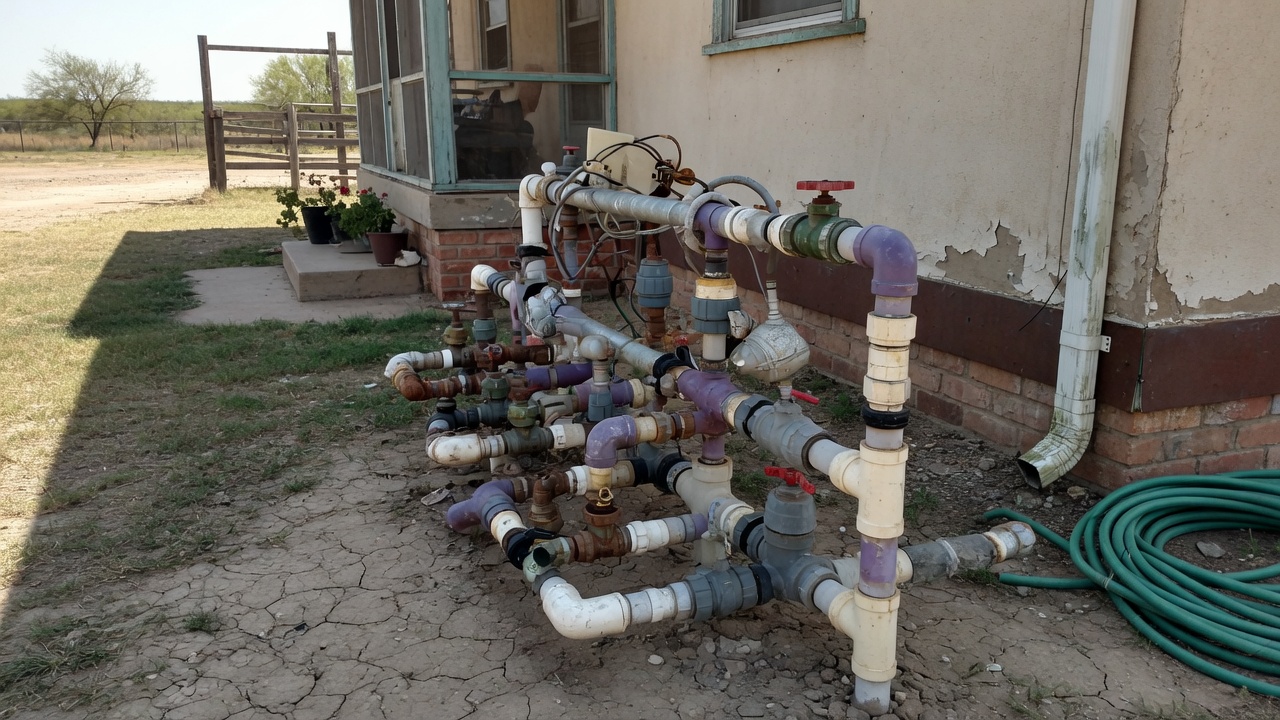
A rusty riser on an East Boulevard lawn is a clue about the pipe, not just a clue about the head that snapped off. Homes along East Boulevard sit near the SH-225 exit, and a lot of them were plumbed for irrigation long before swing joints and matched nozzles were ordinary. What you see at the surface is a pop-up. What you are often standing on is a stack of repairs: a galvanized nipple in a PVC tee, a poly patch on a brittle lateral, a valve that was replaced while the pipe feeding it was left alone. Swapping the head again will green up one circle for a month. It will not stop the next fitting from letting go two feet away.
The decision on these yards is not “new system or nothing.” It is whether the failure is a part you can change from above, or a material that has reached the end of its strength underground. Those are different bills, and they look similar if you only watch the grass.
What older pipe actually looks like
Galvanized steel shows up most often as the short threaded piece under the head, and sometimes as an old manifold or a run that someone was proud of in a decade when plastic was still the experiment. Steel rusts from the inside. The outside can look only speckled while the bore has narrowed to a straw. Heads on that line sputter, then clear, then spit rust on the sidewalk the first week they run in spring. A nozzle clogged with orange flakes is not a dirty filter in the head. The flakes are the pipe, leaving.
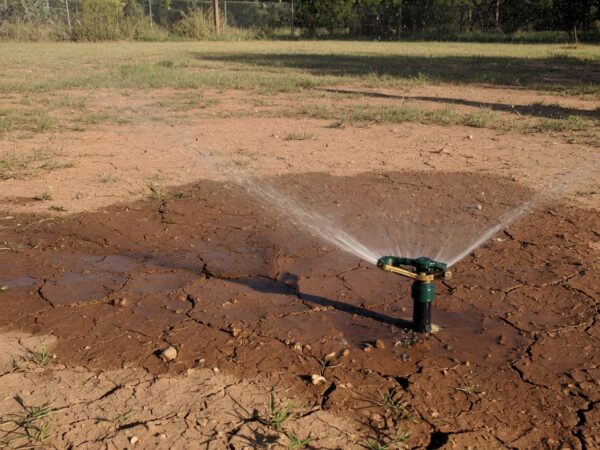
Early PVC on the same streets fails a different way. It gets brittle. A shovel, a root, or a hard freeze that left water in a shallow lateral will crack it along the fitting, not as a round hole. The crack weeps while the zone runs and may go quiet when the zone is off, which makes people think the head gasket is the leak. None of that looks like “the sprinkler head is old” once you dig the first six inches.
A useful habit on East Boulevard is to unscrew one broken head and look at what it came off of before you buy the replacement. Clean plastic threads on a funny-pipe elbow mean the head itself died and the lateral is probably fine. A steel nipple packed with rust, or a PVC stub that crumbles when you touch it with pliers, means the head is the messenger. Put the same head back on that stub and you will be here again after the next mow or the next cold night.
A surface leak versus a tired system
Run the zone and find the wet spot. Dig only enough to see the joint. If the pipe on both sides of a single cracked fitting is still flexible or still solid, holds its color, and is buried at a decent depth, repair that joint and stop. One bad glue joint happens on new pipe too. Age is not the diagnosis just because the house is older than the neighborhood across town.
Call it a system problem when the same zone has failed in more than one place, the pipe you expose is brittle, every riser is rotten galvanized, or a row of mismatched couplings marches across the bed. Also call it a system problem when opening a head sends rust instead of a clear stream. Narrowed steel will not feed the heads that were added later. New nozzles on that pipe just make a finer mist.
Most East Boulevard yards need a middle path. Replace galvanized risers with swing joints as they fail, and replace a lateral that has cracked twice, then leave the quiet zones alone. A full sprinkler installation is right when the mainline, the valves, and the pipe are all rotten, or the layout was never right. It is wrong when one head was clipped and the rest of the pipe is sound. The dig decides. The age of the house does not.
Shutoff, backflow, and the part nobody wants to touch
Older systems hide their worst failure at the water source. The isolation valve ahead of the backflow may not have been turned in years. Handles seize. When a lateral blows out, a seized shutoff turns a small repair into water that will not stop. If you already know the handle will not move, that is its own job, and it belongs before any trenching. The write-up on a seized shutoff valve is the sequence for that handle. Do not discover it at the moment a pipe is already open.
City of Deer Park water is protected by a backflow assembly on the irrigation tap. On older East Boulevard installs that device may sit in the sun on galvanized nipples, or it was added later and tied into pipe that was never meant to hold it. If it drips while the zones are off, fix the device or the nipples under it before you chase wet spots in the lawn.
Find the meter. With every zone off and the hose bibs closed, the meter should sit still. If it creeps, you have a leak under pressure on the irrigation side or somewhere else on the property. A creep that starts only when a zone valve is opened is downstream of that valve. That single test separates a mainline leak from a bad head, and on old pipe it is worth doing before anyone trenches a guess across the yard.
Deer Park Conditions on East Boulevard
Shallow pipe is what the occasional Deer Park freeze finds. A single hard night cracks galvanized and brittle PVC that were left full, and clay holds that water against the pipe so a small crack is a soggy rectangle by morning. Trapped water is the January problem, not Gulf humidity.
East Boulevard also takes traffic off SH-225, and parkway strips get scraped and re-graded when a curb or driveway is redone. Heads end up buried, or the pipe ends up with almost no cover. When you repair, set the new lateral deeper and bring the head up on a swing joint. Matching the old, too-shallow elevation just schedules the next break.
Repair a section or replace the run
Repair the section if you can name the one fitting, the pipe on either side is sound, and the rest of the zone holds pressure without weeping. Replace the run if rust, brittle plastic, or a chain of old couplings is the pattern, or if the zone cannot deliver a solid stream once the nozzles are clean. Replace the system if the mainline, the shutoff, and the valves are all in the same condition as the risers, or if the layout waters the driveway and starves the back yard no matter which head you change.
Sprinkler repair on this street is honest when it includes the pipe you cannot see from the porch. A new head on a steel nipple is a parts sale, not a repair.
East Boulevard older-system checklist
- Unscrew the broken head and identify what it threads onto before you buy a match.
- Treat orange flakes in the nozzle as pipe rust, not as dirt from the lawn.
- Dig to the first fitting. Sound pipe on both sides means a joint repair. Crumbling pipe means a run.
- Count failures on that zone. A second break in the same season is a material problem.
- Watch the meter with the system off. Movement means a leak under pressure, not a weeping head.
- Try the irrigation shutoff when nothing is broken. A seized handle is an emergency you can still prevent.
- Check the backflow for crust, lean, and drips while the zones are off.
- Set new pipe deeper than the scrape-line along the parkway, and use a swing joint at the head.
- Do not put a new timer on a mainline that has already failed twice.
If the riser crumbles in your hand or the meter will not sit still, call Deer Park Sprinkler Repair at (281) 764-7088. Say whether the wet spot is there with the system off or only while a zone runs. That one detail decides whether the visit starts at the head or at the pipe under East Boulevard.