An irrigation audit is not a technician walking the yard and saying the lawn looks fine. A walk-through can spot a broken head and a leaning rotor. An audit measures how much water lands, how evenly it lands, and whether the schedule has any relationship to those numbers. In Deer Park that difference matters, because humidity makes grass look moist and clay makes a short run look generous. Neither one tells you the depth in the root zone.
People ask for an audit after a water bill moves or after a dry stripe survives a summer of longer runtimes. The useful version answers three questions. What is the pressure at the heads. What depth did the catch cups collect. How many minutes does this zone need for the depth you meant to apply. Everything else, from a tilted head to a nozzle mix, is evidence for those answers.
Catch cups and the depth you can defend
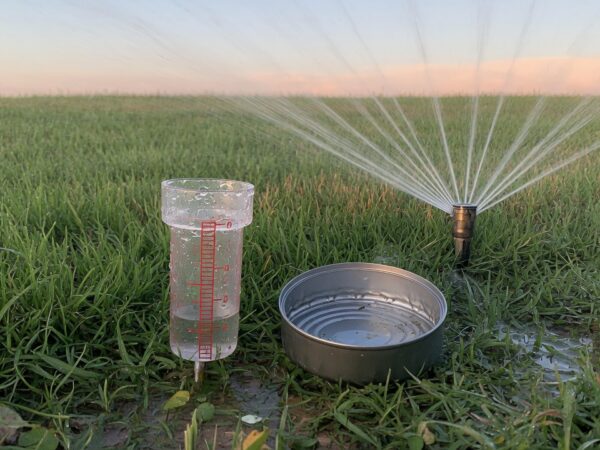
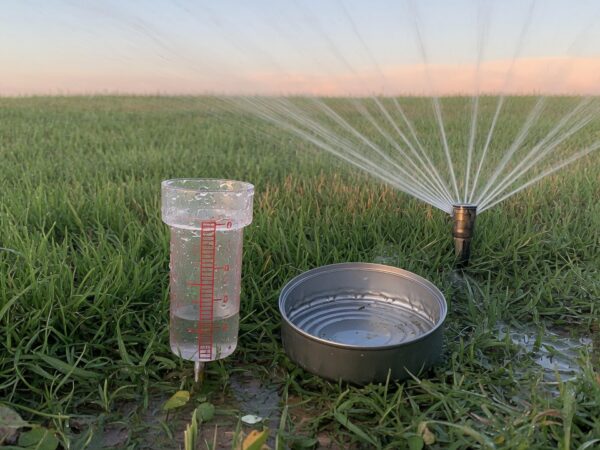
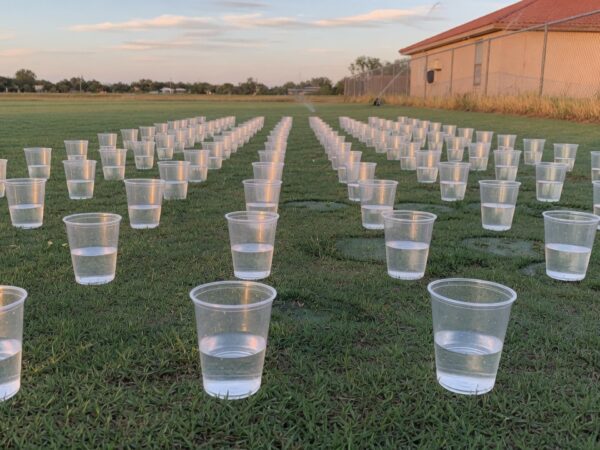
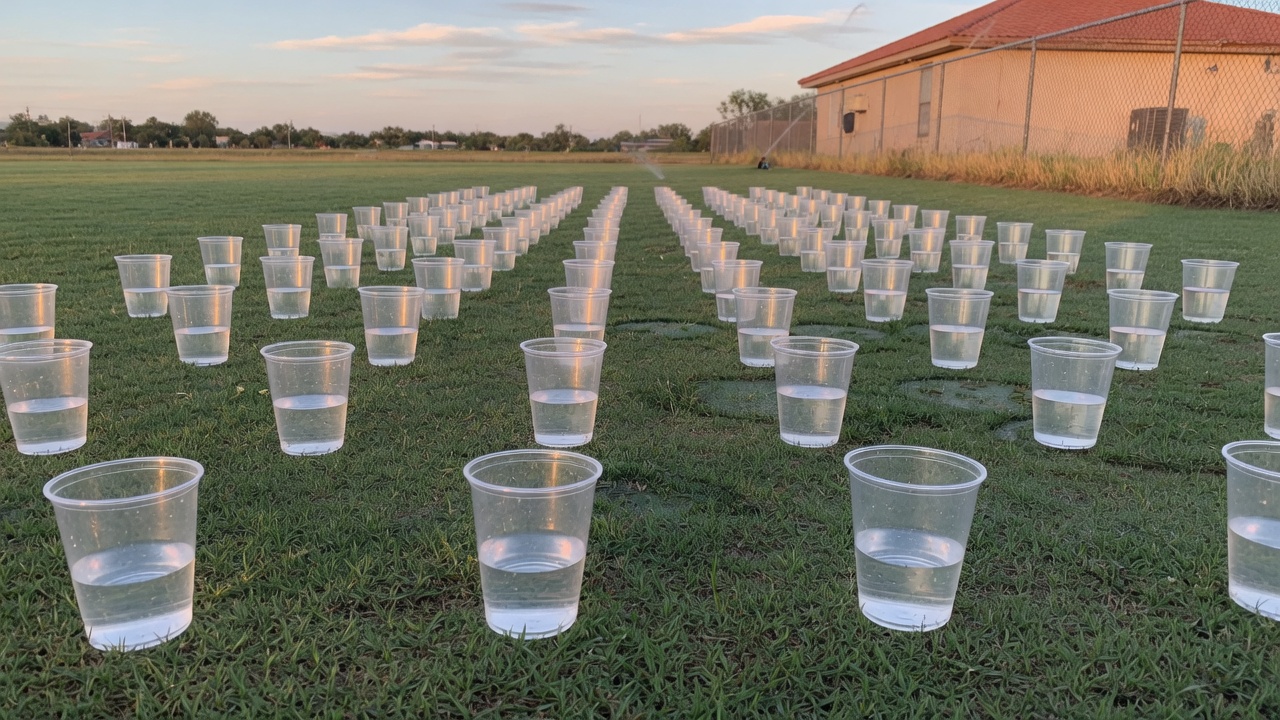
Catch cups are straight-sided containers set in a grid across one zone. Tuna cans work in a pinch because the sides are vertical. A tapered cup lies about depth. You run the zone for a timed interval, often long enough for sprays to put a measurable film in the cup and longer for slower rotors. Then you read the depth in each cup and convert it to inches per hour. That number is the precipitation rate of this zone as it actually runs, not the rate printed for a new nozzle at a lab pressure.
One cup by the porch is not an audit. The point of the grid is the spread. If the cups near the heads read high and the cups between heads read low, the average will still look acceptable while the lawn shows both puddles and pale patches. Distribution uniformity is the plain-language comparison of the drier cups to the overall average. When the dry quarter of the cups is far below the average, adding minutes mostly overwaters the wet spots. The dry spots never catch up, because the hardware is uneven. Fix the hardware, then set the time.
Write the zone name and the actual minutes on the same sheet as the cup readings. A controller that says 15 minutes while the zone ran 22 will point the catch test at the wrong culprit.
Pressure, flow, and the schedule hiding in the controller
Depth is the result. Pressure and flow are the causes you can still change. Many spray nozzles are built near 30 psi. Much higher and they mist, so a cup downwind catches less than a cup at the head even though the nozzle is “throwing far.” Many residential rotors are charted higher, often somewhere around 40 to 50 psi, and a rotor starved below its chart will not reach the next head. A gauge at the hose bib is city pressure at that moment. A gauge at the head is what the nozzle feels after the meter, the backflow, the valve, and the lateral. Those two readings are allowed to disagree. The head reading is the one that belongs in the audit.
Flow, if you can read it from the meter while only that zone runs, tells you whether the zone matches its nozzle math. A zone that should be near a known gallon rate and is far above it is often leaking, or a nozzle is missing and the riser is an open pipe. A zone far below its expected flow is often a stuck valve that is only partly open, a clogged filter, or a closed ball valve someone left half shut after a repair. The catch cups will look “a little low” until you see that the zone is not moving the water it was built for.
Then read the controller without assuming the display matches the lawn. Note start times, runtimes, cycles, and any seasonal percentage. A 50 percent seasonal adjust on a program that was already short is a different problem from a 100 percent program running every day through a wet week. Rain that fell yesterday does not appear in a clock. The audit compares the clock to the cups and to the rain you actually had. A practical seasonal list lives in the spring sprinkler maintenance checklist, but the audit is what tells you whether that checklist’s runtimes fit this property.
What an audit is not
An audit is not a promise that every head must be replaced, and it is not a guess based on the neighbor’s timer. A spinning meter with the system off still gets written down, because a leak makes every efficiency number meaningless. If the cups are even, the visit may end with a shorter program and a working rain sensor. If the cups are scattered, the list is raised heads, matched nozzles, a split zone, or a pressure fix. Measure first so the repair aims at the dry cups.
Deer Park conditions an audit has to account for
Gulf humidity does not fill a catch cup, so do not grade the audit by color. Grade it by depth. Afternoon wind off the SH-225 corridor, and across open streets toward La Porte, pushes mist out of the cups and onto the sidewalk. A dawn-only test writes a runtime that fails on a normal weekday. Test in a representative breeze, or note the wind so a drifted test is not treated as the zone’s true rate.
Clay changes what you do with a correct rate. A zone measured at an inch and a half per hour can hit the weekly depth on paper and still fail in the yard, because the soil stops taking water and the rest runs to the gutter along Center Street or East Boulevard. The audit should record the minute when runoff starts. That minute is the longest cycle you should use. The rest of the needed depth waits and runs again after the clay has taken the first drink. St. Augustine, common on these lawns, shows the miss quickly in summer and can stay too wet in a shaded side yard if you water to the sunniest cups only. Occasional freezes belong in the notes too. A head cracked in a cold snap will empty a wild stream into one cup and starve the others. That is not a scheduling insight. It is a broken head. City of Deer Park watering rules and backflow expectations sit outside the cup test and still belong on the same page: a beautiful audit that ignores the current watering schedule or a failed backflow device is not finished.
Audit checklist
- Turn off other water uses. Confirm the meter is still, or write down that it is not, before any zone runs.
- Run one zone at a time. Record the station number and the actual minutes, not the minutes you intended.
- Set catch cups in a grid, including the spots you already think are dry and the spots that puddle.
- Measure pressure at a head on that zone while it runs. Compare it with the nozzle chart.
- Convert cup depth to inches per hour. Compare the drier cups with the average before you change the clock.
- Note the minute runoff starts on clay. Cap each cycle there and split the rest.
- Check arcs, tilt, sunken heads, and mixed nozzle types. Those explain scattered cups.
- Read the controller: starts, runtimes, days, seasonal percent, and whether a rain sensor is actually stopping the program.
- Repeat for the next zone. Do not copy the front-yard rate onto a rotor zone in the back.
Use the numbers
An audit that stays in a drawer changes nothing. Plug the measured rate into the runtime, split cycles on clay, and fix the hardware that made the dry cups dry. The wider habit list is in water-saving irrigation tips for Deer Park lawns. Hardware that needs nozzles, heads, or a valve goes through sprinkler maintenance, not through another week of added minutes.
If you would rather have the cups read and the controller rewritten in one visit, call Deer Park Sprinkler Repair at (281) 764-7088 or use the contact form. Know which zone looks wrong and, if you can, whether the meter moves when that zone is off. The audit is a set of measurements. The lawn only improves after those measurements change the clock or the parts.