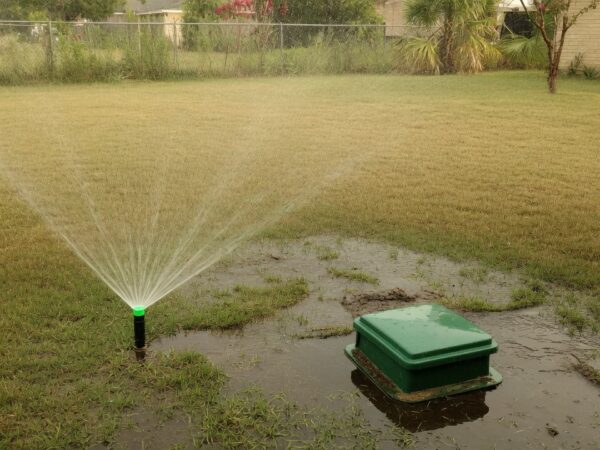
Pump the valve box dry, close the lid, and come back in an hour. What you find the second time is the whole diagnosis. On the north side of Deer Park, toward the Houston Ship Channel, with Channelview on the far side of that channel, plenty of valve boxes hold water even when every solenoid is innocent. The water table sits high, clay keeps the hole from draining, and rain plus irrigation recharge the little sump you built when you dug the box. Replacing the valve because the box was wet is the most common wasted repair on this side of town. The valve may still be bad. The water, by itself, does not prove it.
Groundwater, a weeping valve, and a mainline leak can fill the same rectangle of black plastic. They do not return on the same schedule, and they do not move the water meter the same way. Separate them before anyone cuts a manifold.
Three sources, three clocks
Bail or pump the box empty. Shut the controller off. Leave the irrigation shutoff in its normal position for the first test, because you want to know whether pressurized pipe is feeding the hole. Come back in an hour without running a zone. If the box is full again and the meter never moved, you are looking at groundwater or drainage from the soil around the box, not a leak under pressure. A leak on a live mainline makes the meter creep. Soil water seeping through the knockouts at the bottom of the box does not.
If the box stays empty until you run a zone, and then water rises while that zone is on or just after it shuts down, the valve or something downstream is the source. A solenoid that does not close, grit on the diaphragm, or a diaphragm with a pinhole will send water down the lateral the whole time the system is supposed to be off, and some of that water finds its way back along the pipe into the box. A lateral cracked at the valve outlet does the same during the cycle and may stop when the valve actually closes. Tie the water to a clock. “It was wet when I opened it” is not a clock.
If the box fills while everything is off and the meter is turning, stop. That is pressurized water leaving the pipe, and it may not even be the valve. It can be the fitting on either side of the manifold, a nick in the mainline that happens to surface in the box, or a union that was never tightened after the last repair. Chasing that with a new solenoid leaves the leak in the ground. The steps for a meter that will not sit still belong with finding a mainline leak. Do that before you treat the symptom in the box.
What high groundwater looks like up close
Groundwater leaves a stain line at about the same height every wet week, drops in a dry stretch, and returns after a Gulf rain with nobody touching the controller. Zones can still start and stop while the splices sit underwater. That rots connectors. It does not prove the diaphragm failed. Replace the soaked connector before you replace the valve.
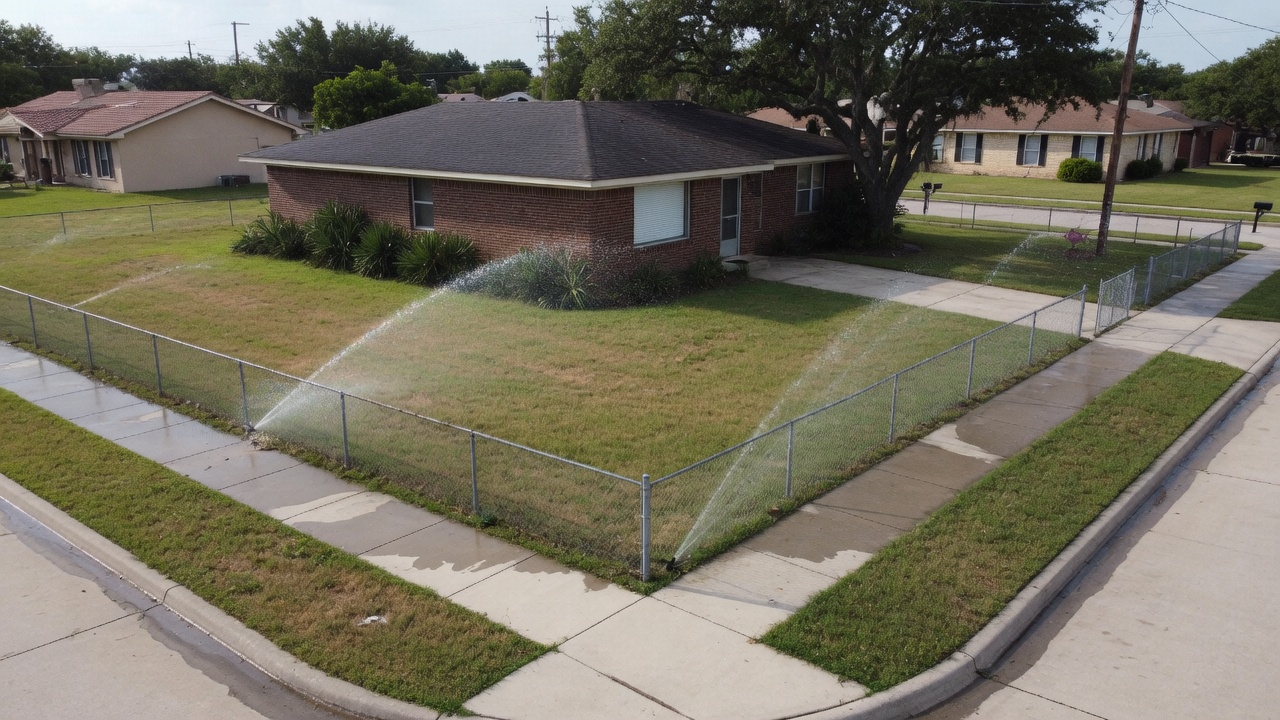
A weeping valve usually leaves a tell on the lawn too: one zone’s heads never quite dry, the lowest head seeps, or a soft patch appears along that lateral even on mornings when the program did not run. Groundwater in the box does not pick a zone. If the yard is behaving and only the hole is wet, believe the yard. The longer discussion of a box that is simply full, without this water-table pattern, is why a valve box fills with water. Use that list once the hour test says the water is not tied to the ship-channel water table.
Harris County clay is why the hole stays full. Gravel dumped in the bottom of a box with no outlet is a cleaner sump, not a drain. On a flat north-side lot there is often nowhere lower for that water to go.
What to change so the box can stay dry enough to work
If the hour test says groundwater, raise the manifold so the splices and the solenoid sit above the stain line, even if the bottom of the hole stays damp. Do not stack a tower of couplings. Use waterproof connectors, leave a little slack, and reset the soil so rain sheds off the lid. A lid below grade is a funnel.
Add a drain only when you can name where it goes. A line that daylights is a drain. A hole full of rock is not. Pumping the box every Saturday is how solenoids get replaced once a year.
If the hour test says the valve weeps, then it is valve repair: shut the water off, open the valve, clean or replace the diaphragm, and flush the line so the grit that caused it does not sit down on the new rubber. If only one station’s solenoid is electrically dead and the diaphragm is fine, replace the solenoid and the soaked connector, not the whole manifold. If the meter moves with the system off, do not open the valve until the leak under pressure is found. Opening it first only adds mud.
Deer Park Conditions North Toward Channelview
Deer Park’s north edge is the ship channel, not a shared fence with Channelview. Channelview lies beyond that water. The practical effect on irrigation is the same low, wet ground: a higher water table, slower drainage after rain, and valve boxes that refill from the soil. A south-side yard near Spencer Highway can have the same clay and a drier hole. Do not copy that story onto a north-side manifold.
A dry August may empty the box and convince you the valve healed. It did not. The next soaking rain fills the hole again if the box still sits in the groundwater. A full box does not mean the City of Deer Park backflow failed. Test the meter before you test the device on the wall.
This pattern shows up across the north-side service area, anywhere the grade leans toward the channel and the boxes were set low because that made the heads easier to grade. Low was easy the day it was installed. Low is a sump now.
Leave the valve alone until the clock agrees
Replace or rebuild the valve when water returns only after that station runs, when a zone seeps with the controller off and the meter agrees, or when the solenoid is electrically open and the diaphragm is torn. Raise the box and the splices when water returns on its own, the meter is still, and the lawn is not seeping. Find the mainline when the meter turns while the system is off. Doing all three at once, because the box looked ugly, is how a simple groundwater visit turns into a manifold replacement that is wet again by Friday.
Valve box water checklist
- Pump the box dry with the controller off. Look again in one hour. Do not decide anything in the first five minutes.
- Watch the water meter during that hour. Movement means a leak under pressure. No movement means the soil is refilling the hole.
- Note the stain line. That is the water table you have to beat, not the rim of the box.
- Run one zone only after the hour test. If the box stayed empty until the zone ran, suspect that valve or its outlet fitting.
- Look for a lowest head that seeps on a day the schedule did not run. That is a weeping valve, not groundwater.
- Raise splices and solenoids above the stain line. Use waterproof connectors and a little slack in the wire.
- Reset the grade so surface water runs away from the lid.
- If the meter creeps with the system off, find that leak before you buy a valve.
If the box refills and you cannot tell whether the meter moved, call Deer Park Sprinkler Repair at (281) 764-7088. Say whether the lawn is dry while the box is wet, and whether this is a north-side yard toward the channel. Those two facts decide whether the visit is a raised box or a real valve job. A wet hole toward Channelview is common. A bad valve is not automatic.