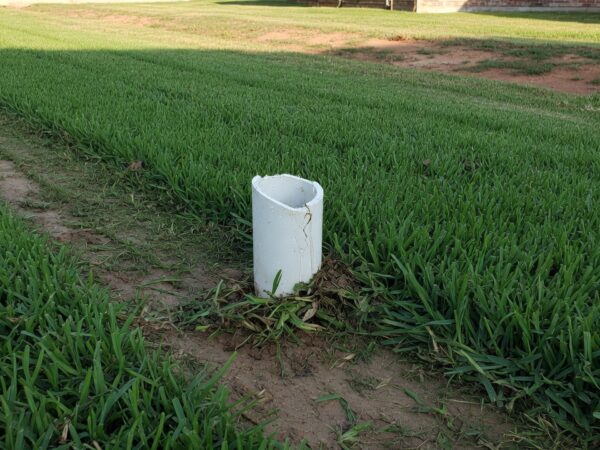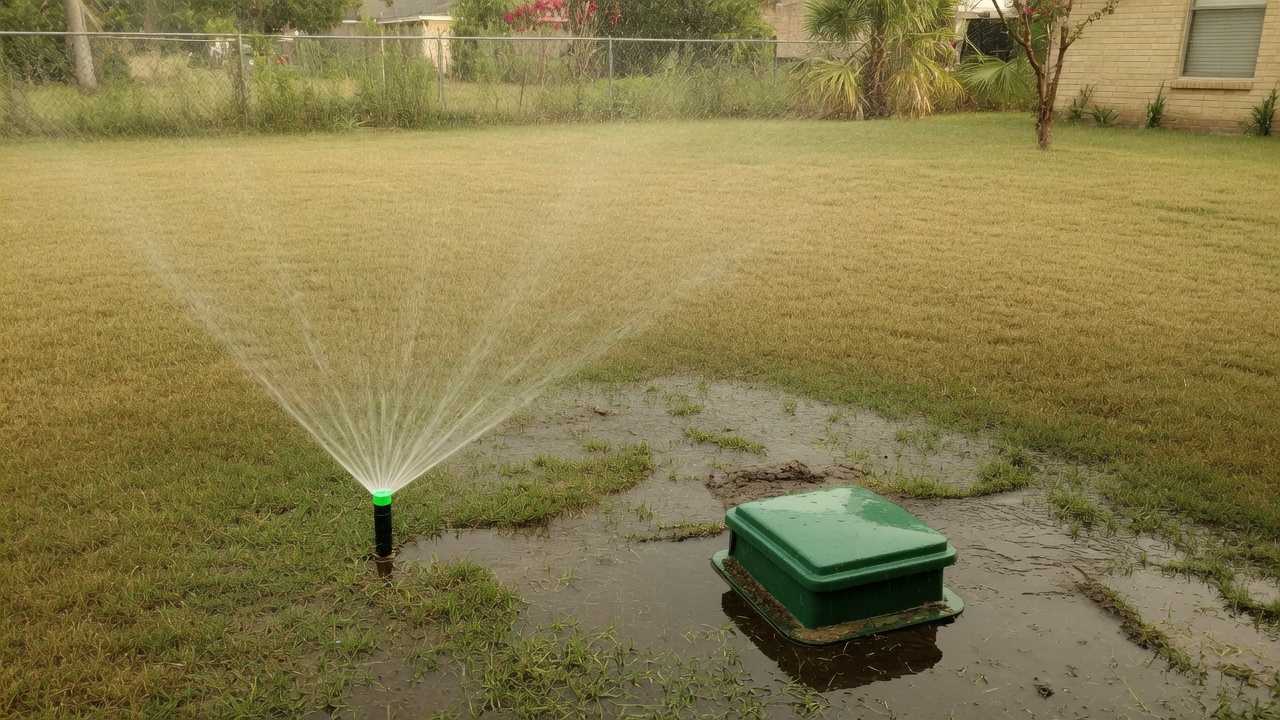
The meter is the honest witness. It is late morning on a Center Street lot, the controller display says the system is idle, no one is in the shower, and the little flow indicator is still turning. Out back, one zone of St. Augustine is glistening and the water has already found the alley side of the turf. The clock did its job. It removed power from that station. The valve did not agree. Until the valve seats, or until you close a valve farther upstream, that zone will keep spending City of Deer Park water whether the timer is unplugged or not.
Homeowners often start with the controller because it is the only part of the system with buttons. Buttons will not close a diaphragm that has a pebble in it. Learning which failures leave a zone running, and which failures do the opposite, saves a morning of menu-diving while the parkway floods. It also tells you when to stop troubleshooting and simply shut the water off.
A zone valve is not the same thing as the shutoff
Most residential systems in Deer Park have a shutoff at the backflow, then a manifold of zone valves, either in one box or in two boxes if the yard was added onto. Each zone valve is a diaphragm valve. Water pressure on top of the rubber diaphragm holds it closed. A small port, controlled by the solenoid plunger, dumps that top pressure when the controller calls for the zone, and inlet pressure lifts the diaphragm so water can go to the heads. When the solenoid drops again, the top chamber refills and the diaphragm closes. Anything that keeps the top chamber from refilling, or keeps the diaphragm from sitting flat, leaves the zone on.
A burned solenoid coil usually leaves the plunger down, so the zone stays dry. The failure that keeps a zone running is mechanical: a plunger stuck up, a bleed screw open, debris under the diaphragm, or a torn diaphragm. A shorted station wire can also hold a solenoid up. You will hear it buzz while the display says off. Unplug the controller. If the zone keeps running in the dark, the schedule is not the problem.
What you can check without taking the valve apart
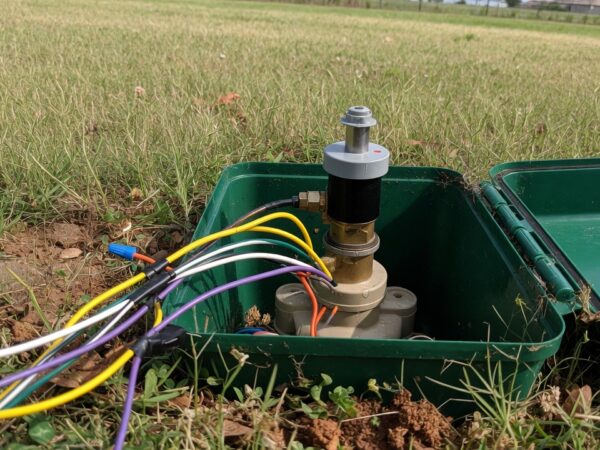
Find the box for the zone that is running. On older Deer Park installs the box is often near a side fence, just past the backflow, or in a shrub bed where the lawn stops. Open it slowly. A box that is already full of water is its own problem, and it is easy to confuse that standing water with the zone flow. The running zone is confirmed by heads that are up or by the sound of water through the valve, not by a damp box alone. Boxes fill from rain, from a weep at a union, and from high water tables after a Gulf storm. That separate mess is covered in a valve box full of water.
On many Hunter and Rain Bird valves a bleed screw or lever forces the valve on with no power. Seat it gently clockwise. If the zone stops, watch the next automatic cycle anyway. If it does not stop, snug the solenoid by hand. A cross-threaded solenoid cannot seal its port. Pliers on a plastic bonnet are how bonnets crack.
Leave the flow-control stem alone until the valve actually closes. That stem limits how far the diaphragm opens. It is not the shutoff, and moving it only confuses the next test.
Debris, torn rubber, and the rebuild decision
Grit, a scrap of tape, or a bit of old seal on the diaphragm seat will hold a valve open because the rubber cannot meet the body. Open the bonnet only with the water off and with the diaphragm made for that model. A universal kit and a reused, stretched spring are why a “fixed” valve sticks again in a month.
A torn diaphragm will not stay closed, and replacing only the solenoid does nothing for a tear. If the rubber is soft or holed, install a new diaphragm and flush the line first so the debris does not move to the next valve.
How a stuck zone floods a flat Deer Park lot
A lot of yards between SH-225 and the neighborhoods south of Spencer Highway do not have much fall. There is no slope to carry water to a back property line and hide it. Water from a stuck zone reaches the sidewalk, then the gutter, then the inlet on the corner. Clay speeds that up once the surface seals. The first half hour may look like a thorough watering. The second hour is a sheet. By the time someone notices on the way home from work, the St. Augustine is underwater in the low corner and the meter has been turning since morning.
That is also why “let it run until the technician gets there” is a bad plan if the heads are up and the street is wet. The lawn is not banking that water for later. Clay this tight sheds it. You are paying City of Deer Park rates to wash the curb, and you are keeping the turf wet enough to invite disease as soon as the humidity is high, which in a Deer Park summer is most days. Nearby streets in Pasadena and Channelview flood the same way in a stuck-zone event. The shutoff you need is still the one on your side of the meter.
A zone that ran for hours can also blow a weak fitting. When you restore water, walk the heads. A new geyser is collateral, not the original failure coming back. Other symptoms that travel with a stuck zone are in five signs your system needs repair.
Shut it down in this order
- Unplug the controller or switch it off so you are not troubleshooting a live station and a dead valve at the same time. The program is stored. You will not lose the schedule on a normal residential timer by killing power for an afternoon.
- Close the irrigation shutoff. On a typical Deer Park house that is a ball valve on the inlet side of the backflow, just downstream of the meter. Turn it a quarter turn so the handle is across the pipe. Do not close the city’s meter valve unless you cannot find any other shutoff and water is entering a structure.
- Open a zone manually for a few seconds if you know how, or wait, so pressure downstream of the shutoff can bleed. Heads should drop. If they stay up, you closed the wrong valve.
- Find the running zone’s box only after the spray has stopped, so you are not kneeling in flow. Note the valve brand and whether the bleed was open.
- If the backflow relief port is spitting or flowing continuously, leave the shutoff closed. That is a different failure than a zone valve, and it needs a tester, not a nozzle adjustment.
- Call with the valve brand if you can read it, the zone number, and whether the solenoid was buzzing with the controller unplugged. Those three facts separate a rebuild from a wire repair.
Do not cap heads to stop a stuck valve. The leak will move to a fitting you cannot see. Do not leave the manual bleed cracked as a permanent way to run the zone.
When the valve itself has to be replaced
Rebuild a sound body. Replace a cracked body, stripped solenoid threads, or a valve whose diaphragm you can no longer buy. Epoxy on a cracked body puts you back in the same flooded yard. After the repair, run the zone from the controller, confirm the heads stay down, and check the meter with the system idle.
If the zone is running right now, treat it as emergency sprinkler repair and close the shutoff before you do anything else. Scheduled diagnosis and replacement sit under valve repair. Describe what you see and call (281) 764-7088. The controller was never the part holding the water back.