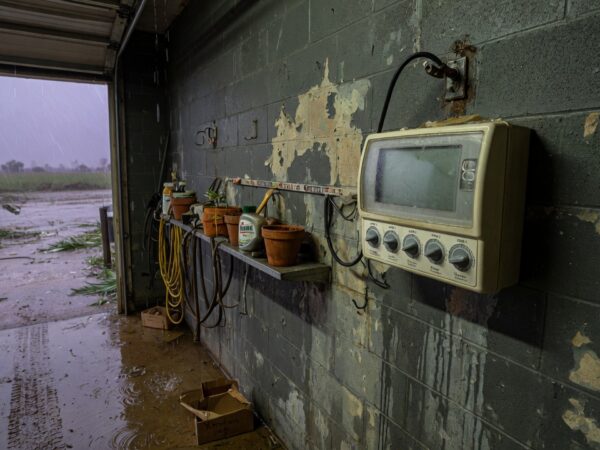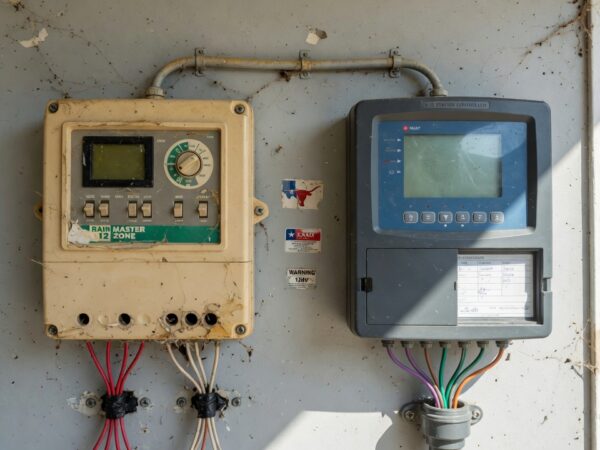
Open the controller on the side of a Deer Park garage in October and you will often find July still living in the schedule. Forty minutes on the parkway, thirty on the back, every morning, as if the Gulf had not already dropped an inch of rain on Tuesday and the St. Augustine had not slowed down. The lawn is not asking for that water. The timer cannot tell. It has no weather, no soil, and no memory of the puddle you stepped over on the way to the door. A smart controller is the pitch that says it can. Sometimes that pitch is true. Sometimes you have paid for a better brain on a system whose pipes still dump water in the street.
Worth it, in this town, is a narrower question than the box copy suggests. City of Deer Park water is metered. Summers are hot and humid, then a tropical system parks overhead and the same yard needs nothing for a week. Clay seals if you apply water in one long take. A controller that skips rain, shortens cycles when the air is already wet, and splits run times so the soil can absorb them will save real gallons. A controller that blindly runs a bad zone more precisely will save nothing. The hardware does not fix a stuck valve, a tilted head, or a zone with too many nozzles. It schedules whatever those parts are able to do.
What “smart” actually changes
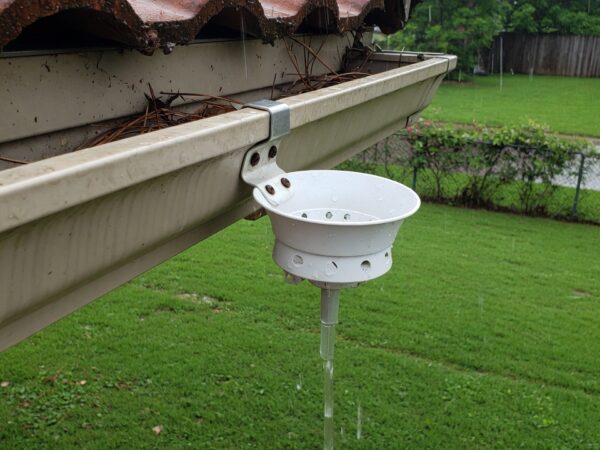
A conventional timer stores days and minutes and will run them through a thunderstorm unless a rain sensor interrupts it. Many sensors on older Deer Park installs are stuck off or packed with dirt. A smart controller can shrink or skip those minutes from weather, a local feed, or a rain input. The useful part is simple: less water when the lawn is not using it, and no cycle when rain already did the job.
Hydrawise, Rain Bird’s smart panels, Rachio, and the other panels on local garages all ask you to describe each zone: sun or shade, sprinkler type, and soil. That interview is the product. Tell it every zone is spray on sandy loam and it will water the clay side yard that way. The Wi-Fi radio is not what saves the bill. The zone notes are.
There is a failure mode specific to storms. A smart controller that loses the network does not always sit idle, and it should not. Most of them keep the last program and run it locally. After a Gulf squall knocks out a router, you can get a week of “offline” watering that is slightly stale but still sane, or you can get a controller that fell back to a default you never reviewed. Knowing which one you own matters before hurricane season, not during it. The details of timers that go quiet or go stubborn after those storms are in Wi-Fi timers after Gulf storms. Buy the controller whose offline behavior you understand.
What it will not do to a Deer Park system
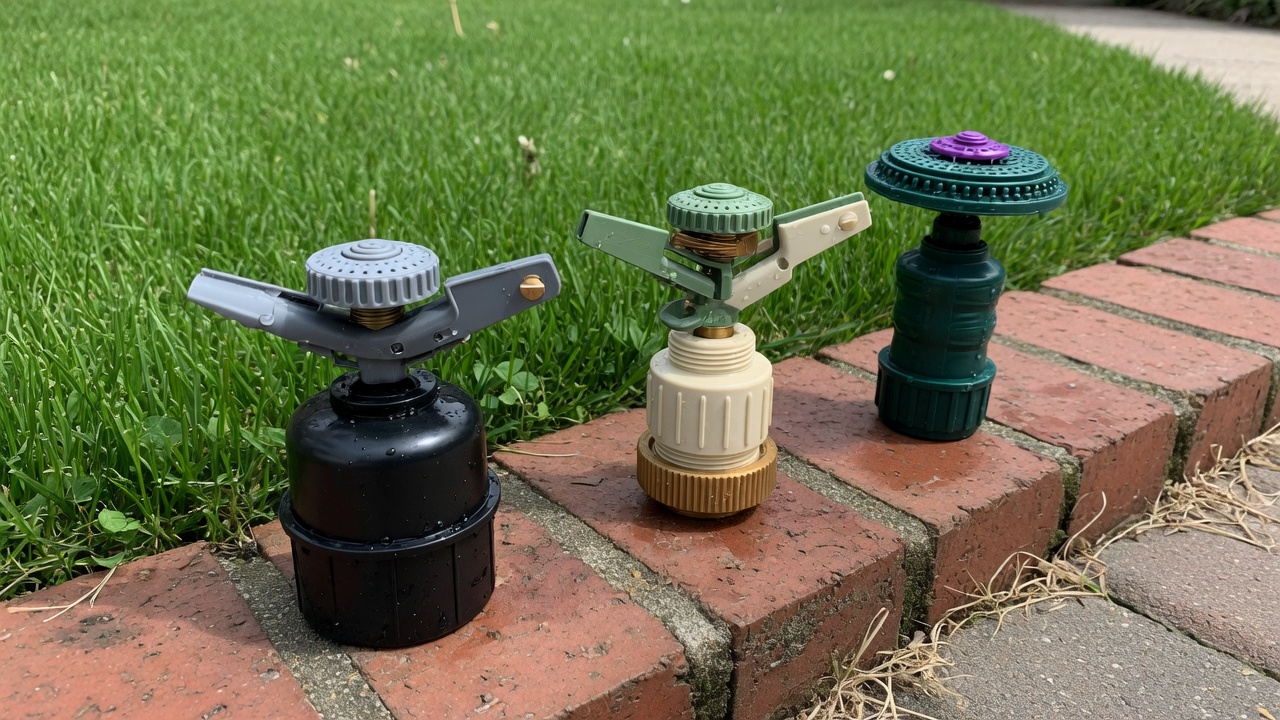
It will not close a valve with a torn diaphragm. If a zone runs on and on with the controller unplugged, no app on your phone is in charge. Fix the valve, then automate. It will not put water on a dry stripe caused by a sunken head or a nozzle aimed at the fence. Those minutes are already being spent. Making them weather-aware only wastes less on the days rain would have covered the mistake. It will not split a zone that has too many heads for the pipe. The app may offer a longer run time because the lawn looks dry in the middle. Longer is not flow.
It will not know the City of Deer Park drought stage unless you tell it. When a stage is on, automatic irrigation follows the trash collection day and a night and early morning window. A 2 p.m. start on the wrong day is a violation with a forecast icon. The rules are in how Deer Park watering rules affect your timer. Set the allowed window first. Let weather skip days inside it, not invent new ones.
Why Deer Park humidity and clay decide whether a smart timer saves water
Most of the savings are the gallons a July schedule wastes in April, and the gallons it wastes the morning after a soaking rain. St. Augustine on clay does not need a daily drink in a wet week. A fixed timer runs anyway. Wet clay sheds that water to the gutter along East Boulevard. Skipping the cycle is the difference between a schedule and a hose left on.
Evaporation is slower here than desert-town advertising implies. A controller tuned for a dry climate will overwater Deer Park clay and call it science. Pick a soil setting that behaves like clay, turn on cycle and soak, and watch for a month. Sheen and runoff mean the zone applies water faster than the soil can take in one pass. Shorten the cycle. Do not fake a lower bill by calling St. Augustine a desert shrub.
A back yard with two hours of sun is not the parkway along SH-225, and the tighter lots toward Center Street and the San Jacinto College area need their own notes. If you will not describe zones differently, a basic timer plus a working rain sensor, adjusted by hand in spring and fall, is more honest. A bypassed sensor is a decoration.
A checklist before you spend the money
- Walk the zones and fix heads that spray the street, valves that weep, and leaks that run with the timer off. Automation on top of a leak automates the leak.
- Write down, for each station, whether it is spray or rotor, sun or shade, and whether water already runs off before the cycle ends.
- Confirm the current Deer Park drought stage, your trash collection day, and the hours automatic irrigation is allowed. Program those limits before you connect the app.
- Turn on cycle and soak for clay. Several short runs with a pause beat one long run that ends in the gutter.
- Test the rain skip. Wet the sensor, or use the app’s rain delay, and make sure the zone you expected to cancel actually stays off the next morning.
- Read what the controller does when Wi-Fi drops. You want a sensible last schedule, not a mystery default, after a storm knocks the router out.
- Look at the water bill the month before and the month after, and change one thing at a time so you know what helped.
Skip the upgrade if you are about to renovate the yard, move heads, or split zones. Program the controller after the hardware is stable. Programming it twice is how old run times sneak back in. Skip it also if the “smart” feature you were sold is only a phone button that starts the same excessive schedule. Remote control is convenient when you want to test a zone from the driveway. It is not water management.
A fair way to decide
The gallons a July schedule wastes in April are the budget a smart controller has to beat. Houses that already skip rain and follow the watering day see a smaller change. Houses that have not touched the dial in a year see a larger one, if the heads and valves are sound.
If the current timer is dead, buzzing, or unable to keep a schedule through a brief power blink, replacement is justified on reliability alone. Choosing the smart version of that replacement makes sense when you will use the restrictions, the soil setting, and the rain skip. Choosing it as a substitute for repair does not. Installation of a new controller, smart or otherwise, sits with sprinkler installation and with controller repair when an existing panel has failed and the yard itself is fine. If you want a second opinion before you buy a box, call (281) 764-7088 and say whether the timer is dead or merely wasteful. Those are different jobs, and only one of them is solved by an app.