Replacing the controller is the expensive guess. The cheap test is whether the timer can still send power to a single station that you already know is good. A blank screen, a zone that will not start, or a clock that wanders after every storm can each be a dead controller. They can also be a tripped device on the garage wall, a rain sensor that is doing its job, a solenoid in the yard, or a backup battery that costs less than lunch. Deer Park yards collect all of those failures in the same summer, and the box on the wall gets the blame because it is the part you can see without a shovel.
Repair the controller when a part of it has failed and the rest still runs the yard. Replace it when the platform itself is done: burned terminals, a case full of ants and corrosion, buttons that no longer match the display, or a unit that forgets the program every time the power blinks. Wanting a phone app is a third decision, and it is not the same as either repair.
Start with power, not with a new timer
If the display is dark, look at the outlet and the GFCI before you look at catalogs. Garage and outdoor receptacles trip. A controller that shares a circuit with a freezer, a charger, or a floodlight will go dark when that device faults, and it will look exactly like a dead clock. Reset the GFCI. Plug in a lamp if you need to prove the outlet. The separate note on a GFCI that tripped the sprinkler controller walks that circuit. Do not buy a controller from a tripped button.
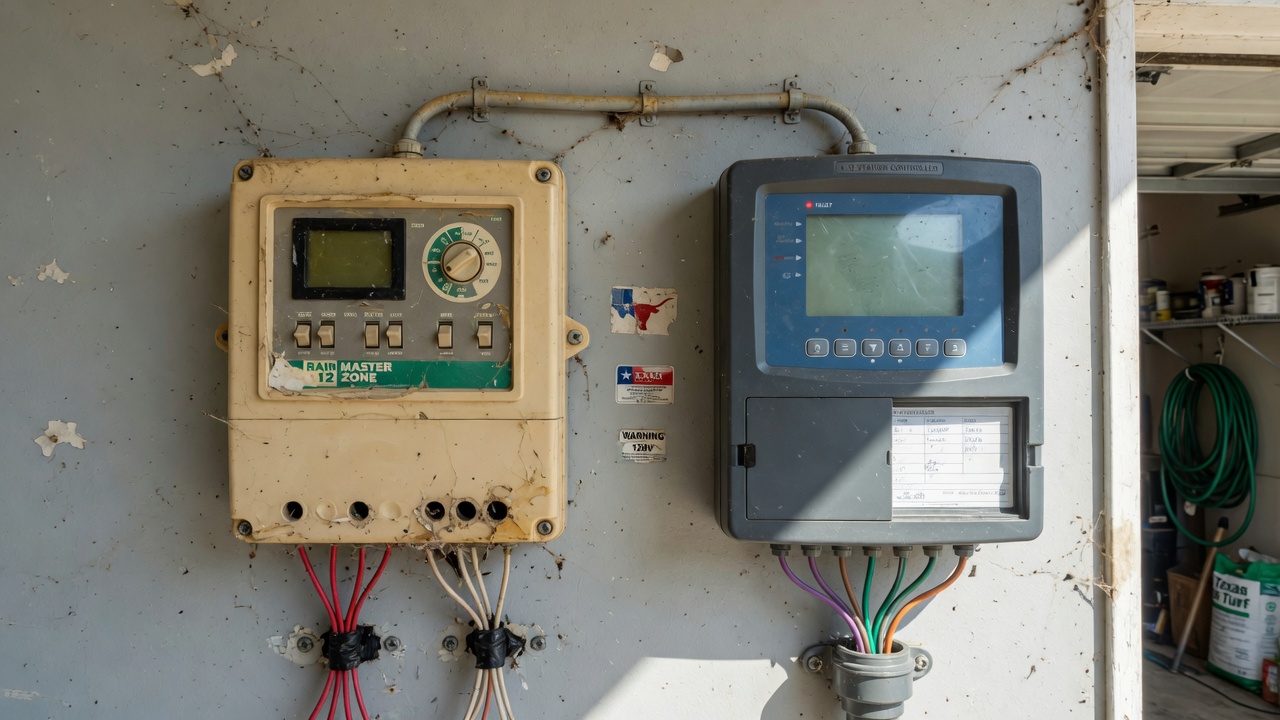
If the outlet is live and the display is still dark, the transformer or the internal fuse is next, and that is as far as a homeowner should go without killing power. Unplug the controller or switch off the breaker before the faceplate comes off. A fuse you can see and replace, or a transformer that has failed while the terminal strip is clean, is a repair. A terminal strip that is brown, melted, or crusted with fertilizer dust is not a fuse problem. That controller has been wet or overloaded, and a new fuse will sacrifice itself to the same short. Power off, and treat the unit as done until someone checks the field wiring that cooked it.
A display that dies the moment one zone starts, while the other stations run, is usually that station’s solenoid or wire pulling the power down. Replacing the timer leaves the short in the ground.
One dead zone is rarely a dead controller
Run the stations manually, one at a time. If eight zones start and one does not, the clock, the power supply, and the common wire are doing their jobs. The failure is that station: a bad solenoid, a broken zone wire, a switch on a module, or a terminal that has loosened. Swap the dead station’s wire with a live station’s wire only with the power off. If the fault moves with the wire, the yard is guilty and the terminal is not. If the fault stays on that terminal, a modular unit may need one module, not a new brain. Replace the whole controller only when modules are gone or the base is corroded.
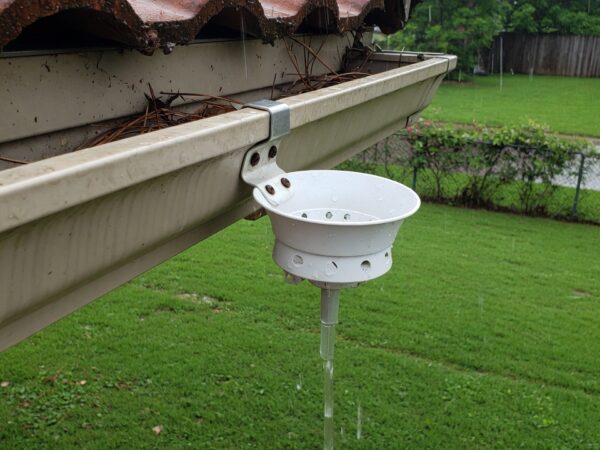
No zones at all, with a bright display, is the sensor and common-wire check. Bypass the rain sensor the way the manufacturer shows and try one station. If it starts, the controller did not fail. A master valve that never opens feels the same in the yard: the clock clicks and no water moves. A click indoors and silence at the valves means the signal is dying in the wire, not in the display.
When replacement is the honest answer
Replace the controller if it loses the time and the program after ordinary outages even with a fresh backup battery or a fresh charging cycle. Replace it if the keypad does not match the screen, if segments of the display are dead, or if it turns zones on at random and a full reset does not stop that. Replace it if the case is cracked open to the weather on an exterior wall and the terminals show corrosion you cannot clean back to bare metal. Replace it if you need more stations than the unit and its modules can offer and the yard truly has those zones. Do not replace it because one solenoid was loud, because the GFCI tripped once, or because the schedule was simply wrong for July.
A burned terminal is a reason to replace and a reason to find the short before the new unit is installed. Putting a new controller on a field short repeats the burn. The same is true of a valve that draws more than it should. Controller repair includes saying no to a replacement that will die for the same reason the last one died.
Wanting weather skip or a phone app is an upgrade, not proof the timer failed. A working controller does not become broken because an app exists. The comparison belongs in whether a smart controller is worth it in Deer Park, and it applies after every zone already runs. A smart controller on a dead solenoid only gives you a better view of the failure.
Deer Park Conditions That Kill Clocks
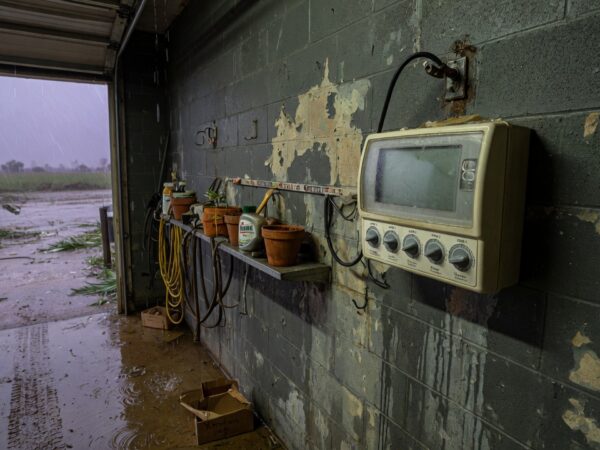
Heat and storms do more damage here than the occasional freeze. An outdoor controller on a west or south wall cooks in a Gulf Coast summer, and the display goes flaky years before a garage unit would. Afternoon storms through Harris County trip GFCIs and send surges that blank a board that was fine at noon. Freeze is the smaller risk for the clock and the larger risk for the backflow. A controller that “failed” in January often only went dark because the outlet tripped.
A master valve after the City of Deer Park backflow can stick and make a good timer look dead. Include it in the single-zone test. Corrosion climbing out of a wet valve box is a field fault, not a reason to condemn the clock by itself.
A plain decision
Keep and repair the unit if the outlet was dead, the sensor was holding it off, one module or one terminal failed, or a fuse or transformer is a stock part and the board is clean. Replace the unit if memory, display, keypad, or a burned, corroded base has failed, and only after the field short that may have caused the burn is found. Upgrade to a smarter controller only when the zones already run and the feature will change the schedule in a way you will actually use. A new timer does not level heads, does not open a seized shutoff, and does not split a zone that has too many sprays.
If the replacement is part of a larger rebuild, that is sprinkler installation work, not a faceplate swap. New pipe and old wiring in a flooded box will put the new clock back in the same ditch.
Repair or replace checklist
- Dark display: test the outlet and reset the GFCI before you shop.
- Run each station manually. One dead station means follow that wire, not the whole controller.
- Swap a dead station wire with a live one only if you can do it safely. A fault that moves with the wire is in the yard.
- No stations, bright display: bypass the rain sensor and listen for the master valve.
- Display that dies only when one zone starts: suspect that solenoid or wire, not the clock.
- Replace if it forgets the program, the keys lie, the screen is partial, or the terminals are burned or corroded.
- Find a field short before you power a new controller on a burned terminal.
- Do not buy a smart controller to fix a zone that never starts. Buy it, if you buy it, after every zone runs.
If you have already proved the outlet is live and you still cannot get one known-good station to click, call Deer Park Sprinkler Repair at (281) 764-7088. Say how many zones still run and whether the display stays lit when a station starts. That is enough to tell a repair from a replacement before anyone drives to the house with the wrong part.