In a Deer Park July the air is already wet. A schedule written for a dry week will sit on the leaves and invite fungus. St. Augustine can look tired for a dozen reasons, and the reflex is to add a start time. On this clay, in Gulf humidity, that reflex is how a small pale patch becomes a set of rings. The soil never dries between cycles. The leaf stays wet past midnight. Fungi that like warm, humid nights do the rest. The heads are often working perfectly. They are the delivery system for too much of a good thing.
The decision is not “water or do not water.” The lawn still needs a measurable drink in a hot, rainless stretch. The decision is how to tell a fungus week from a drought week, and how to set the clock so you are not buying disease with the meter.
Wet-leaf brown versus dry-soil brown
Walk it in the morning before you change a number. A drought spot on clay is firm underfoot, the soil is light when you scratch it, and the blades are folded or dull blue-gray. Footprints stay because the grass is limp, and a cup set in the spot during the next cycle comes up short or the pattern misses it entirely. That spot wants coverage or a fair runtime, not a lecture about fungus.
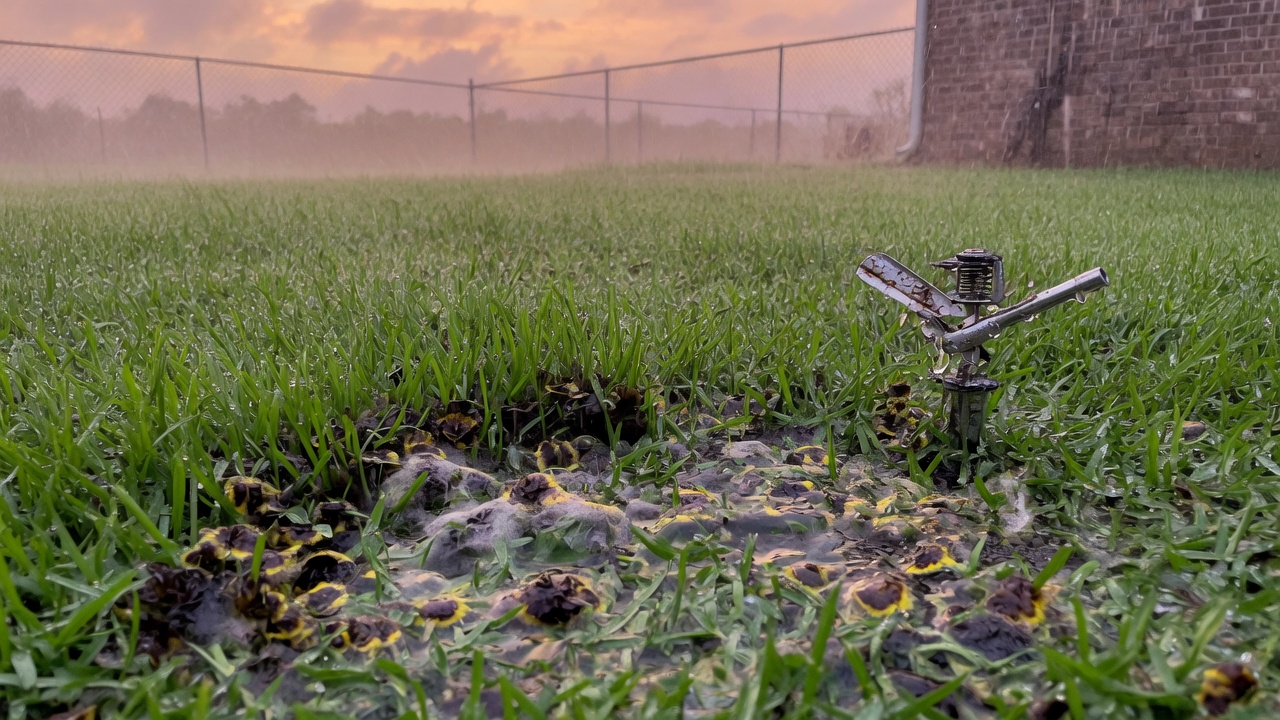
A fungus spot in the same month is soft. The soil is dark, footprints may stay, and the color is a patch or a ring rather than a wedge aimed at a head. The edge can look watersoaked or smoky. It often shows up after several muggy nights, after a tropical rain the controller did not skip, or after an evening program “to help it through the heat.” Cups in the brown and the green catch similar amounts of water, sometimes a lot of it. The brown area is not being missed. It is being kept wet. Adding ten minutes because the color scared you is the error that locks the disease in place.
A sunny parkway on Spencer Highway and a shaded side yard often share one zone and need opposite runtimes. If the rings are only in the shade, do not water that side for the sake of the hot strip. Split the zone. Do not average them into a number that is wrong everywhere.
What to change on the controller this week
Water in the early morning, when the leaves can dry as the day starts and before the breeze toward La Porte is at full strength. Do not water at dusk. Dusk is comfortable to stand outside in, and it is also how St. Augustine stays wet for the longest possible night. One deep drink, a few mornings a week, beats a light spray every evening. In a humid week with rain, skip. A rain sensor that is stuck open, or a sensor covered by a shrub, will keep running through a soaking week. Clean it and test it. If you do not have one, turn the controller off when the soil is already soft and turn it back on when the screwdriver test says the top few inches have firmed up.
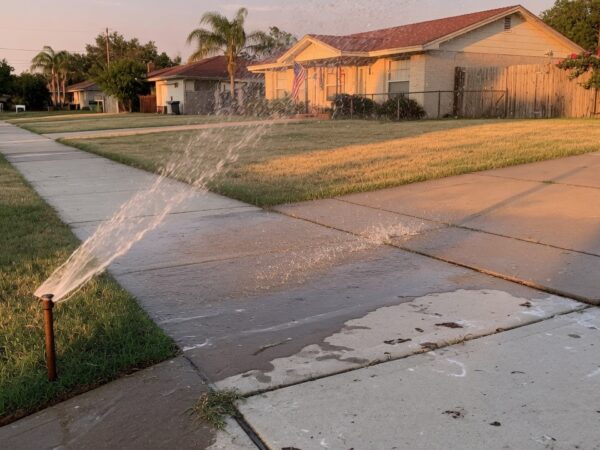
Clay cannot take a long single run from a spray head. The precipitation rate is faster than the soil. Water puddles, runs to the gutter, and still leaves the root zone under-watered while the surface stays glossy. That glossy surface is enough for fungus even when the roots did not get a full inch. Cycle and soak: a short run, a rest long enough for the water to move into the clay, then another short run. You put down the water the grass needs without parking it on the leaf all night. Rotors and multi-stream nozzles apply water more slowly, so their cycles can be longer, but they still do not belong at dusk in July.
The summer baseline for St. Augustine here, including rainfall, is the subject of summer watering for St. Augustine. Measure a ten-minute cycle in a cup, multiply by the cycles you run, and subtract the rain you got. If that budget is already met and the rings are spreading, the next change is fewer days, not a longer runtime.
Beds, drip, and the grass that is not grass
Mulched beds on a spray zone stay wetter than the lawn and keep the turf edge damp. Beds are where drip irrigation belongs: water on the soil, not on the leaves, and no mist onto the St. Augustine at the border. Leave the turf on a morning cycle-and-soak and take the bed off that clock. The two plantings are not compatible zones.
A weeping valve or a broken head keeps one corner wet between scheduled days. If the soil is soup on a morning the system did not run, fix the leak before you judge the disease. A leak and a long timer look the same at the leaf.
Deer Park Conditions That Favor Fungus
Gulf humidity is the accomplice. A leaf wetted in the evening can still be wet at morning, and clay holds that water. The lower north side, toward the ship channel and Channelview, drains more slowly than a lot nearer the south side, so the same schedule grows rings there. Wind toward La Porte and heat along SH-225 dry the parkway first. Watering the whole yard for that strip is how the sheltered grass gets fungus.
When a City of Deer Park drought stage is actually in effect, use the morning side of the allowed hours. An evening window can still be a fungus window. Read the current stage rather than watering from memory. How those limits work is in City of Deer Park watering. Step the schedule down when nights cool in the fall. A July program left running into wet weather keeps the leaves wet in the season brown patch likes.
Reset the week, then reassess the grass
Stop evening cycles today. Skip if the soil is soft or rain already fell. Move the remaining water to early morning, in short cycles the clay can take, often enough to meet the summer budget and no oftener. Separate beds onto drip if they are the reason the turf zone runs long. Repair any leak that wets a patch between start times. Then give it several days before you decide the lawn needs a fungicide conversation with someone who treats turf. A lot of “fungus” shrinks when the leaf is allowed to dry. A lot of real fungus will not shrink until the watering changes first. Spraying and then running the same dusk program wastes the spray.
This is sprinkler maintenance even though no head may need replacing: sensor, clock, cycle times, and a cup measurement. Maintenance that only replaces nozzles and leaves a nightly program in place will have the rings back by the next humid week.
Humidity and schedule checklist
- Scratch the soil in the brown spot. Hard and pale is drought. Soft and dark is too much water or a leak.
- Cup-test before you add minutes. Even cups in a soft patch means do not add water.
- Move every turf cycle to early morning. Take dusk off the controller.
- Skip days when rain or a soft screwdriver test says the clay is still full.
- Break spray runtimes into short cycles with a soak between them so water enters the clay instead of sitting on it.
- Check the weekly total against a St. Augustine summer budget, and count the rain.
- Pull mulched beds off the lawn zone and put them on drip.
- Look for a weeping head or valve if one spot stays wet on mornings the system is off.
- Clean the rain sensor. A stuck sensor will water a week the sky already watered.
- Do not judge a fungicide, or a new nozzle, until the schedule has been dry-leaf honest for several days.
If a patch stays soup on off days, or you cannot get a zone to finish before the morning window closes because the system is leaking time, call Deer Park Sprinkler Repair at (281) 764-7088. Say whether the soil is soft and whether the program still runs in the evening. Fungus in a humid Deer Park summer is often a schedule. It should not get a new head until the clock is ruled out.