At dusk a retail pad on Spencer Highway can look watered and still be wrong. The front walk is dark from overspray, the seasonal color at the monument is standing in mulch soup, and the side hedge against the service drive is dust. The controller did its job. The design is what failed: one clock, a few valves, and a site that is really three climates shoved against a parking lot. Commercial irrigation along this corridor is not a large version of a Deer Park front yard. The meter is bigger, the hours are narrower, the backflow rules are enforced, and the people walking through the pattern are customers.
Spencer Highway carries local traffic across Deer Park and on toward La Porte, with SH-225 and the ship-channel industrial edge never far north. Pads, strip centers, fast-food sites, and small office fronts share thin planters, reflected heat, and a requirement that the water be finished before the doors open. A residential habit of “another start time in the afternoon” is how a merchant gets a wet entry and a complaint in the same hour.
What fails first on a corridor property
Overspray is the first failure because it is the one the public sees. Heads set for a planter that used to be wider now throw across the walk. A nozzle swapped for a “stronger” one reaches the drive lane. Water on concrete is a slip problem in the morning and a stain by noon. It is also a backflow and water-waste problem only in the sense that the gallons never touched a root. The fix is usually a nozzle and an arc, sometimes a head moved back into the bed, not a longer run time.
The second failure is the mixed zone. Parking-lot trees, a strip of St. Augustine, and a flower bed on one valve cannot share a precipitation rate. The flowers rot, the turf stripes, and the tree well stays dry because the cycle was written for the grass. Commercial sites inherit this from the original bid, when one valve was cheaper than three. Splitting those stations is the repair that makes a schedule possible. Until then, every program is a compromise that shows up as a brown hedge or a muddy annual bed.
The third failure is the clock in a closet. Managers change, the combination on the door changes, and the only person who knew the start times has left. Zones run at 11 a.m. because that was a test cycle in 2019. A labeled controller, a written zone list, and a program that finishes inside the city’s allowed window are the unglamorous part of sprinkler repair on a retail site. Without them the next leak is discovered by a customer, not by the property manager.
Deer Park site conditions on a commercial lot
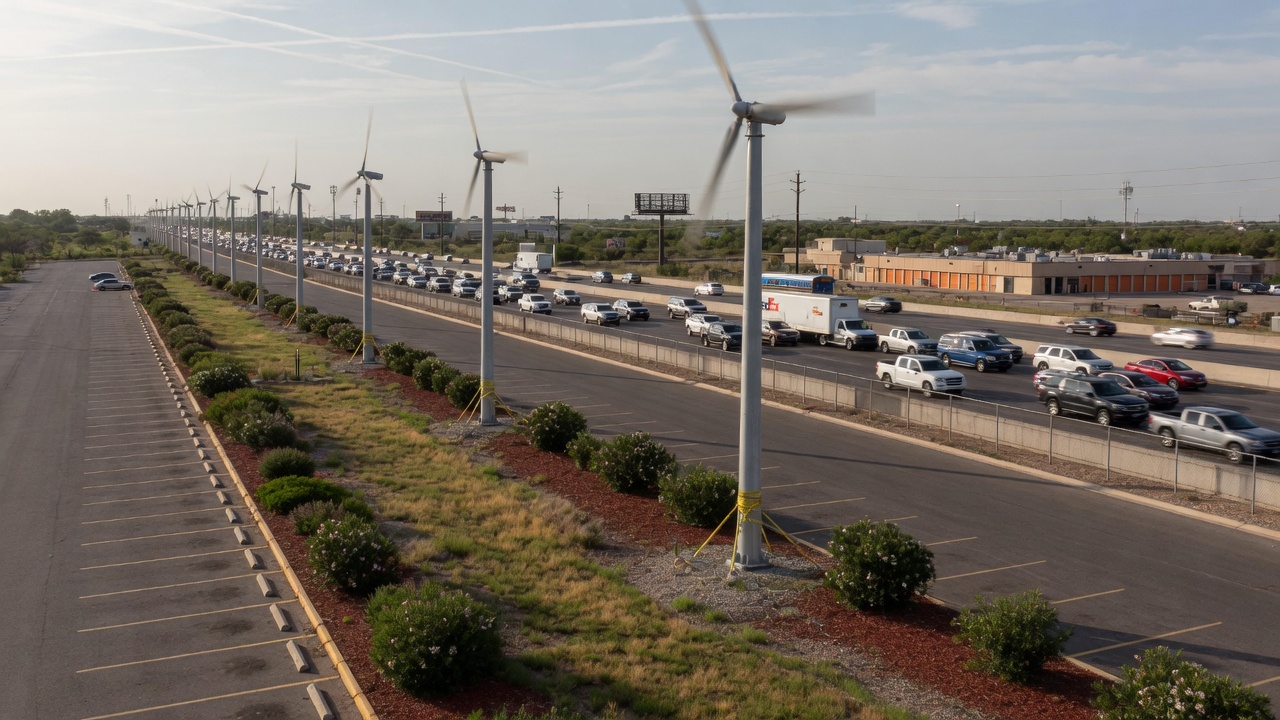
Asphalt is the local weather. A planter surrounded by parking lot runs hotter than a residential lawn off East Boulevard, and the soil volume is often a foot of mix over compacted base. Water runs through or runs off. Cycle and soak still applies, but the cycles are shorter and the margin for a missed day is smaller. A weekend shutdown that a home lawn would shrug off will crisp a Spencer Highway hedge.
Wind along the corridor and from the SH-225 side of town pushes mist out of the bed and onto cars. Rotors chosen for a wide turf panel are the wrong tool in a four-foot planter. Short-radius sprays, or drip under the mulch, keep the water in the soil that exists. Drip also respects the way Deer Park’s drought stages treat low-volume irrigation more gently than spray once restrictions are on. A stage declaration does not pause business hours. The system has to be able to comply and still keep the landscaping alive. Trash-collection day windows, midnight to 10 a.m. and evening hours when a stage is active, are often the entire operating schedule for a store that cannot water at lunch.
Clay under those planters is the same Gulf Coast clay, usually worse because it was trafficked during construction. Heads sink, then spray into the mulch, then get “fixed” by someone pulling them up on a rigid riser that a mower or a door ding breaks. Swing joints and a grade that matches the finished mulch, not the soil under it, are what keep a head findable six months later. Hard freezes are occasional and rude to commercial backflow assemblies that sit above grade in a parking lot. A split relief valve or a cracked PVB is a Monday emergency, not a seasonal surprise, because that assembly is on the constant-pressure side.
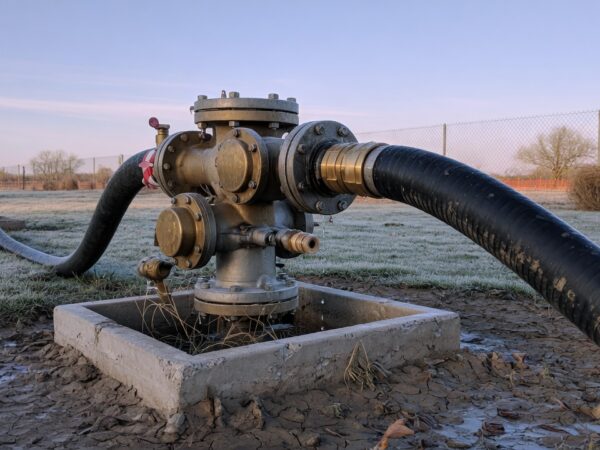
The city’s cross-connection rules are not optional on these meters. Irrigation tied to Deer Park potable water needs an approved backflow assembly. Devices on health-hazard applications are tested at installation and annually. Add fertilizer injection or any chemical and the protection has to be a reduced-pressure principle assembly or an air gap, not a basic double check that was fine for plain irrigation water. The city can discontinue service when a required assembly is missing, untested, or not maintained under TCEQ rules and the city code. A commercial account that skips the annual test is gambling the meter, not just the landscaping.
Retail pads are not HOA medians
A shopping-center manager and an HOA board both say “common area,” and then the work diverges. Retail irrigation is judged by slips, by plant replacement budgets, and by whether the water is off before the first shift. HOA entries are judged by the look of a monument and a boulevard that residents pass at dinner. The valve layouts, the access, and the contracts are different. The HOA version is covered in HOA common-area valves in Deer Park subdivisions. Do not hand a retail tech a residential checklist from an older neighborhood and expect it to describe a Spencer Highway manifold.
Older residential systems, including the ones discussed in East Boulevard’s older systems, fail at splices, small valves, and heads swallowed by St. Augustine. Corridor sites fail at backflow test dates, locked controllers, heads broken by traffic, and zones that water pavement because the tenant changed the planter. The parts overlap. The priority does not.
Checklist for a Spencer Highway property manager
- Walk the site while each zone runs, and mark every head that wets concrete, a car stall, or a door.
- List which stations are turf, which are planters, and which are wrongly mixed.
- Confirm the controller program ends before opening, and that test cycles were not left in the schedule.
- Match the program to the current Deer Park drought stage and to the account’s watering day.
- Find the backflow, the test tag, and the date. Put the next test on a calendar, not in a drawer.
- If anything injects fertilizer or chemical, confirm the assembly is a reduced-pressure device or an air gap.
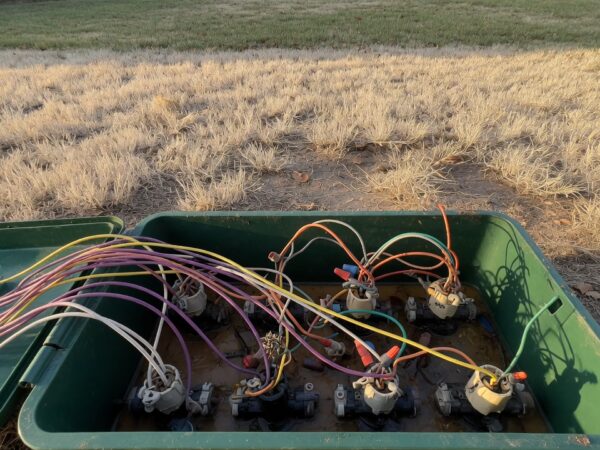
- Open valve boxes that sit in low pavement islands. A full box on a commercial lot is a hidden leak.
- Replace broken risers with swing joints set to the mulch grade, not to whatever height clears a mower today.
- Label zones in plain language a new manager can read without the installer present.
- Keep a shutoff location in the same notes as the alarm code. A mainline leak does not wait for business hours.
Service area, not a single intersection
Spencer Highway is the spine, not the whole map. The same commercial patterns show up on Center Street storefronts, on pads that face the industrial side of town, and on small offices that back up to residential streets. Neighbors in Pasadena, La Porte, and Channelview bring the same asphalt-and-planter problems with different city meters, so the backflow paperwork has to follow the utility that actually serves the site. Deer Park’s rules apply to Deer Park water.
If the walk is wet and the hedge is not, call Deer Park Sprinkler Repair at (281) 764-7088. We repair corridor systems, set programs around retail hours, and point you to the right service area coverage when the meter sits just outside Deer Park but the property is still on this side of the channel.