A hard freeze is in the forecast, the St. Augustine is still green, and the usual advice from a northern video says to blow the whole system out or risk a ruined yard. Deer Park is not that climate most winters. It is also not immune. The useful question is which kind of cold is coming, because a one-night touch of freezing and a multi-day hard freeze are different jobs.
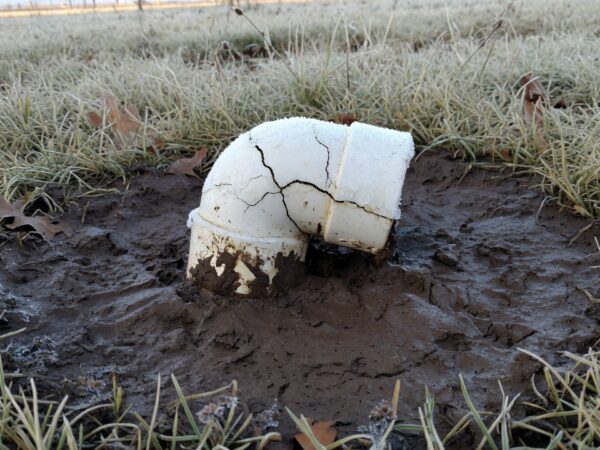
Water left in an above-grade backflow, in a shallow PVC lateral, or in a head can freeze, expand, and split the part. The cost of that split shows up in spring as a flooded side yard, not as dramatic ice. Winterizing here is a set of levels. Doing the northern full blowout every mild December is optional. Doing nothing because “it never freezes on the Gulf” is how a real cold snap becomes freeze damage in Gulf Coast PVC.
Level one: a few hours around freezing
If the overnight low kisses freezing and the afternoon returns to the 40s or warmer, the buried laterals usually survive and the exposed metal does not get a long enough cold soak to matter. Turn the controller to off, or a rain hold, so a start does not land on a morning when heads may still be stiff. Cover the backflow with an insulating cover that can breathe once the cold passes. Do not wrap it in plastic and forget it until April. Trapped moisture and sun cook the assembly, and a cover left on into spring hides a leak you would have seen.
Know where the irrigation shutoff is before the night arrives. If you cannot find it, that is the thing to fix on the calm day, not at dusk with a flashlight. A shutoff you have not turned all year may be seized. Discover that in October, not while a cracked fitting is running.
Level two: a night in the 20s, or a full day below freezing
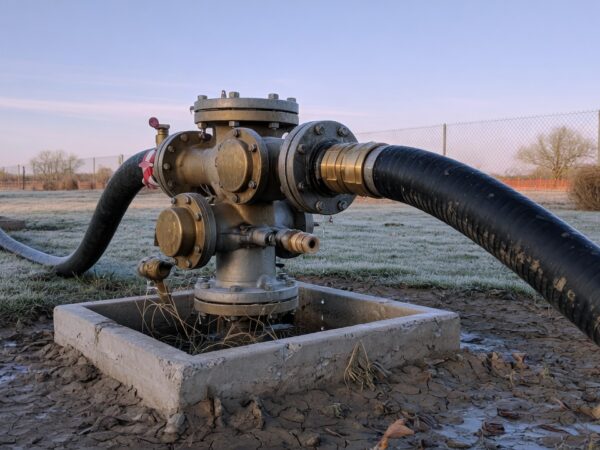
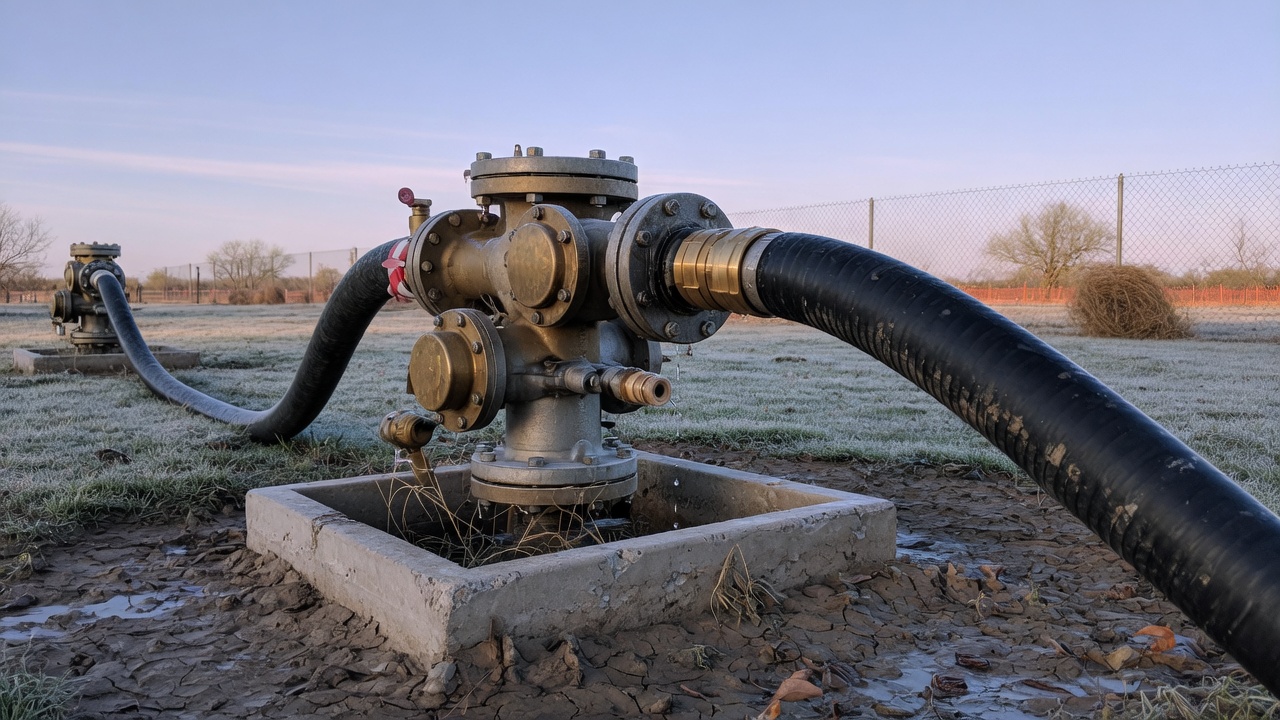
Close the irrigation isolation valve. That stops city pressure from refilling anything you drain. Open the backflow’s test cocks enough to let the water leave the body, and open a downstream drain or the lowest point you actually have, if the system has one. Many Deer Park yards do not have yard drains. The backflow body and the pipe just above grade are the parts that freeze first, so getting the water out of that assembly matters more than chasing every lateral.
Once the body has drained, do not leave the test cocks open and then turn the water back on. An open test cock under pressure is a leak, and it is also a port the next person will not notice until the sidewalk is wet. Leave them cracked only while the shutoff stays closed and a freeze is actually expected, then close them before you restore pressure. Set the controller to off, not merely to “skip this morning.” A power blink can wake a timer into a default program, and a default program will open a valve onto a line you just drained. Skip antifreeze. This system is connected, through the backflow, to drinking water. Automotive antifreeze does not belong in it, and plumbing antifreeze is not a substitute for draining.
Level three: a multi-day hard freeze
This is the case for compressed air, done carefully, on PVC that was never built to be a compressor discharge. Use a compressor with a working regulator. Connect downstream of the backflow, at a blowout fitting or a place you can adapt without sending high pressure backward through the checks. Do not use the backflow as a convenient hose port. Spinning dry checks with a compressor is a good way to turn a winter prep into a failed test in the spring.
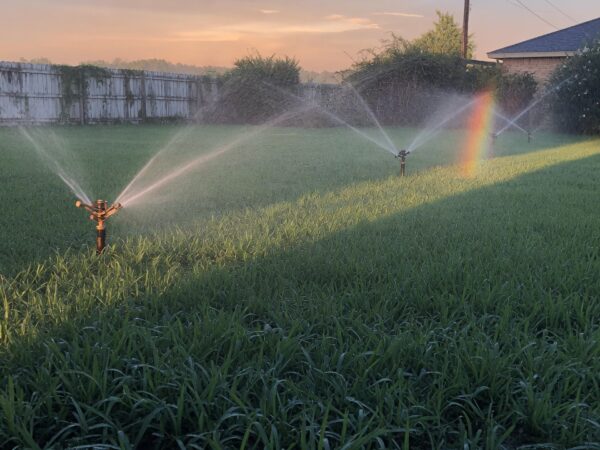
Keep the regulator near 50 psi for spray and rotor zones on PVC, and do not chase a higher number because a video from a colder state did. One zone at a time, until the heads go from a solid stream to a mist and then to air. Stop there. Long dry runs heat the gears and cook seals. Drip zones are a separate, gentler job: high pressure blows emitters apart. Drain drip by gravity, or blow it at a much lower pressure with the ends open, and do not include it in the spray-zone pass. If a fitting lets go during the blowout, you found a weak joint while the water was off. That is inconvenient and still cheaper than the same joint failing in January under pressure. When you are ready for a compressor and a planned visit, that is what sprinkler winterization is for. It is not a guess with a pancake compressor and the regulator wide open.
What you do when it warms up
Close every test cock. Open the isolation valve slowly and listen. A bang, a spray at the backflow, or a new wet spot along a lateral means something split or a port is still open. Walk the zones with short manual runs before you hand the week back to the schedule. Heads packed with silt, valves full of grit, and a controller that lost its clock are the usual spring list, and they belong on a spring sprinkler maintenance checklist rather than in a panic the first hot week.
If you opened, repaired, or replaced the backflow, the City of Deer Park expects that assembly tested by a licensed tester and the report filed. A cover and a hopeful glance are not a test. Schedule backflow testing before the system goes back into daily service, not after a reminder letter. The same rule applies if a freeze cracked the body and you swapped the assembly. New device, new test, paperwork to the city.
Deer Park conditions: rare hard freezes, shallow pipe, green grass
Occasional freezes are the pattern, not a deep winter. St. Augustine may bronze and still be alive. People skip prep because the lawn does not look “shut down,” then a multi-day cold snap, the kind the Gulf Coast gets every few years, freezes the water that was sitting in a backflow in the sun and in PVC laterals only a shovel deep. Frost depth here is not a northern frost depth. The pipes were not buried to survive a week in the teens, because most years they do not have to.
Humidity and clay change the aftermath. A split lateral does not drain away. It saturates the soil, runs toward a foundation, and shows up as a soft stripe when you finally turn the system on in March. Industrial corridors and open lots near SH-225 also get wind on the coldest nights, so an exposed backflow on the north or west side of a house drops faster than one tucked against a south wall. Insulate the one you have, not the one in a diagram. And do not mow or edge as a substitute for any of this. The grass being green says nothing about the water in the bonnet of the backflow.
Checklist: match the work to the forecast
- Find and exercise the irrigation shutoff before cold weather, not during it.
- A brief touch of freezing: controller off, backflow covered, shutoff known.
- A night in the 20s: shutoff closed, backflow drained, test cocks not left open under pressure.
- Controller set to off, so a power blink cannot start a zone.
- No automotive antifreeze in a system tied to potable water.
- Multi-day hard freeze: blow out downstream of the backflow, near 50 psi on PVC spray zones.
- One zone at a time. Stop when the mist turns to air. Do not run heads dry for long.
- Drain drip gently. Do not hit emitters with spray-zone pressure.
- On the thaw: close test cocks, open the shutoff slowly, walk short manual cycles.
- After any backflow repair or replacement, get the test and the city report done.
If you cannot find the shutoff, the backflow is already weeping, or a hard freeze is close and you do not have a safe way to blow the lines out, call Deer Park Sprinkler Repair at (281) 764-7088. Say what the forecast low is and whether the isolation valve actually turns. The prep should fit that cold snap, not a winter this city does not have.