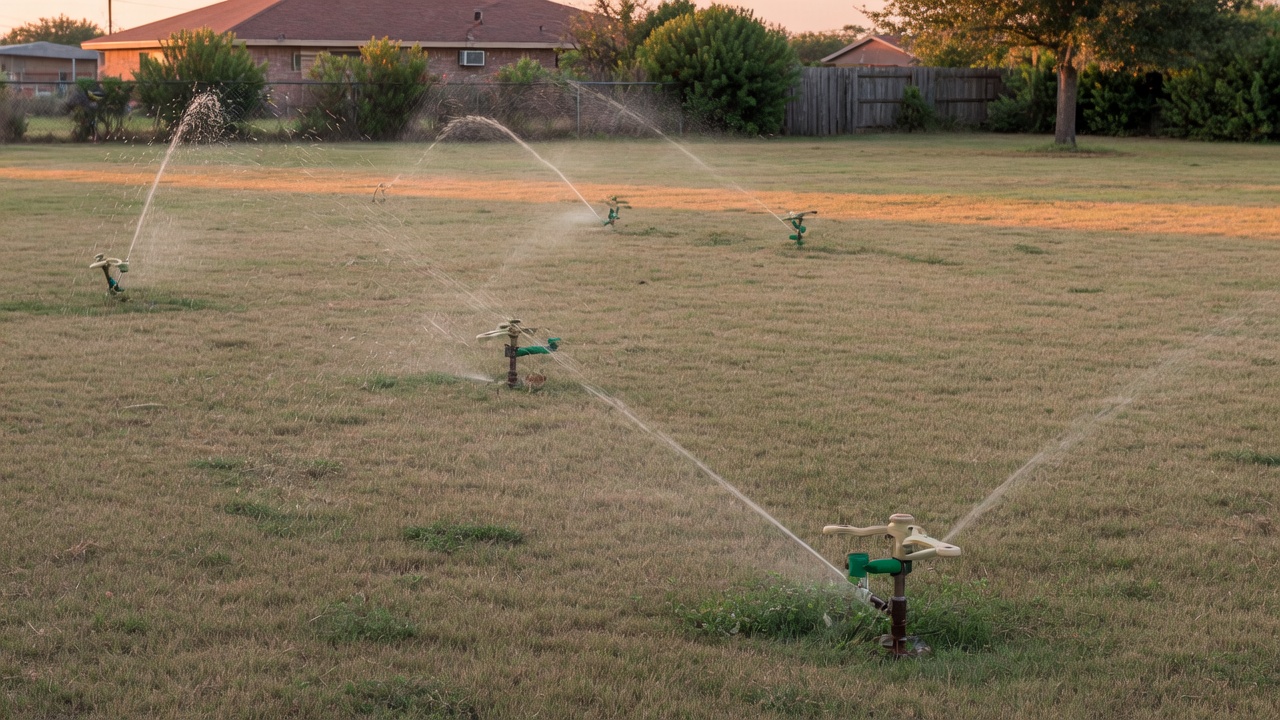
The front yard looks fine. Rotors along the walk in Spencerview reach the beds, the spray on the parkway has a sharp edge, and then the side zone comes on and the heads barely clear the St. Augustine. One of them hisses and lays a heavy stream at its own feet. The instinct is to blame City of Deer Park water pressure, because the kitchen faucet felt soft the same week or a neighbor mentioned a hydrant flush. Sometimes the supply really is down. Much more often, the other zones on the same clock are the control group, and they just proved the supply is adequate. A single weak zone is a zone problem wearing a citywide excuse.
Pressure is the push when water is barely moving. Flow is how many gallons the zone can deliver while it runs. Decent pressure at the backflow can still starve eight open nozzles. Extra minutes do not create gallons. On Deer Park clay they only grow a wet doughnut around each head and a dry stretch between them.
Use the other zones before you blame the city
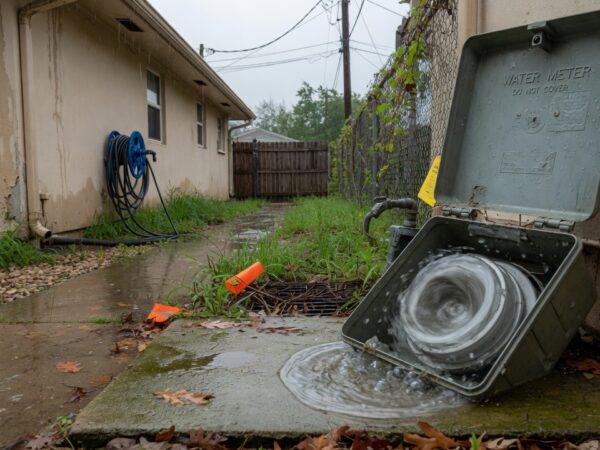
Run every station while you are home, at the hour you normally water. If every zone is short, look upstream of the manifold: a partly closed ball valve, a clogged strainer, a master valve that is not opening, or a regulator stuck low. A whole-house pressure reducer can be involved if the irrigation was tied in downstream of it.
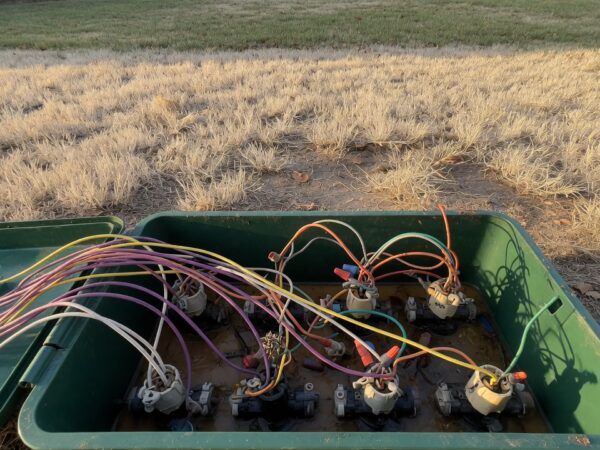
If only one zone is weak, leave the city out of the theory until that zone is inspected. City of Deer Park supplies the meter. It does not supply a separate pressure to the back yard. The split happens at your valves. A zone valve that only opens partway, because of debris, a failing solenoid that is not lifting the plunger fully, or a flow-control stem threaded almost shut, will starve that station and leave the others alone. You can sometimes hear the difference. A healthy valve opens with a clean change in sound. A valve fighting debris flutters or never gets loud.
If the other zones are still strong at the same hour, the shared supply is fine and the weak zone is the patient. If that zone is only weak in the evening, when the block is showering, try an earlier start inside the allowed window before you rebuild a valve that is fine at dawn.
Leaks, clogs, and pipes that got stepped on
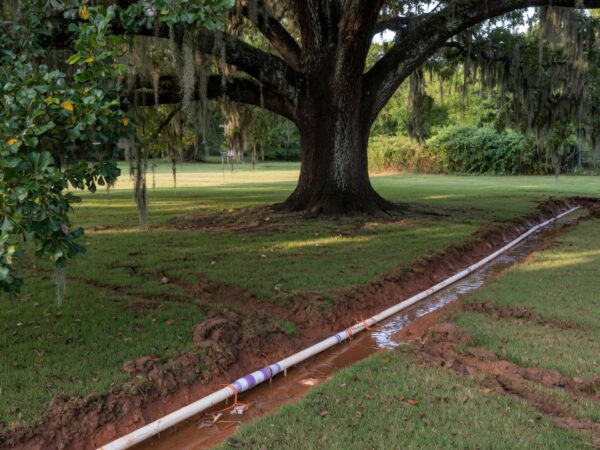
Good heads near the valve and dribbling heads at the end of the run mean a loss along the pipe. Walk that path while the zone runs. A muddy seam or a spot that squishes is the leak. New nozzles on the far heads, without fixing the pipe, make the leak worse.
If every head is lazy and there is no wet seam, pull a nozzle and look at the screen. A city main repair or a new meter can pack those screens with grit. Cleaning them is the cheapest test. If they are already clean, the obstruction is in the valve, a pinched swing joint, or a pipe kinked by a fence post.
Class 200 pipe ovalizes under a point load from edging, a driveway addition, or a heavy mower. No nozzle repairs an oval pipe. Cut back to round pipe and couple it, and look at what changed above ground if two zones went weak in the same corner.
Too many heads is a design problem, not a city problem
Each spray nozzle and each rotor nozzle has a gallons-per-minute appetite. Add them up and compare that appetite to what a typical three-quarter-inch residential zone can move at a pressure the heads actually like. There is a point, well before the pipe bursts, where the zone “works” but every head is below its specified radius. Corners go dry. The owner adds minutes. The bill goes up and the dry corners remain, because the missing coverage was never a time problem. It was too many outlets on one valve.
A moved fence or a new bed often adds heads and removes none. The zone was barely matched and is now over its flow. A stronger nozzle asks for more water and makes it worse. The test and the usual remedy are in too many heads on one zone. Sometimes the honest fix is a new valve and a split.
Why low pressure looks like dry grass on Deer Park clay
Clay that seals and sheds water changes what a weak zone looks like from the street. You do not always get a uniformly pale lawn. You get dark rings at each head, where the lazy stream puddled, and hard soil between the heads, where almost nothing arrived. St. Augustine in those rings grows tall and soft. Between them it thins, and people assume they need more minutes or more fertilizer. More minutes on a zone that is only wetting a six-inch circle will grow a bigger bill and a bigger ring. It will not bridge the gap.
Low pressure collapses sprays into streams that drill the clay and run off. High pressure turns them into mist the wind carries onto the driveway. Neither is fixed by copying a neighbor’s minutes. If the whole property went weak on the same day the faucets did, ask whether the block saw it too. Otherwise push a screwdriver halfway between heads after a cycle. If it stops in the first inch, the zone rinsed the surface. Matched precipitation on Deer Park zones matters only after the far head is actually getting water.
A practical check before anyone digs
- Run each zone and label it strong or weak on paper. One weak zone points at that valve, that pipe, or that nozzle load. All weak zones point at the supply side.
- Note the near-head versus far-head pattern. Far heads worse than near heads suggest a leak or a crushed pipe along the run. All heads equally lazy suggest the valve, a clogged screen set, or too many nozzles.
- Remove one nozzle and look at the screen. Clean it, run the zone into a bucket for a few seconds with the nozzle off, and see whether the flow from the open riser is a solid column or a tired dribble.
- Find the flow-control stem on the zone valve and confirm it is not threaded down to a crack. Do not open a manual bleed and walk away.
- Look along the lateral for a new fence post, a fresh edging trench, or a soggy line. Those are the usual places a shallow pipe gets pinched.
- Check the time of day. If the zone is only weak when the rest of the house is using water, try an earlier start inside the hours Deer Park currently allows before you replace hardware.
Do not add a booster pump because one side yard is short. A pump will not straighten a kinked lateral in Spencerview.
Repair the zone, or split it
Cleaning screens, opening a flow control, rebuilding a valve that will not lift, and replacing a crushed section of pipe are repair work. You will know the repair worked when that zone’s heads match the height and the throw of the zones you already trusted, without stealing strength from them. If the arithmetic of nozzles says the zone was never going to make it, the durable fix is to split the station, add a valve, and give the far heads their own pipe. That is sprinkler installation on a small scale, and it is cheaper over a summer of water than nursing a starved zone with longer run times.
Do not keep adding minutes as a substitute for flow. Extra time on Deer Park clay runs off and still leaves the middle dry. Diagnosis is part of sprinkler repair. Call (281) 764-7088 and say whether one zone or every zone is weak, and whether the far heads are the ones that fail.