The street is dry, the trash cans are back, and the water bill is not the bill you expected. Storms in Deer Park do that. Wind and saturated clay move things underground that looked fine on Friday. A lateral cracks. A fitting slips. A valve sticks open after the controller tried to run through the worst of the rain. None of it has to geyser on the lawn. A small break under turf can move a shocking amount of water before the St. Augustine goes soft enough to notice.
Not every spike is the sprinkler system. A toilet flapper, a water heater, or a softened-water loop can move the same meter. The point of the first hour is to learn whether the irrigation side is the one spinning the dial. Guessing, and then cutting the sprinkler schedule in half, leaves a leak running and dries out a lawn that was not the problem.
Read the meter before you blame the clock
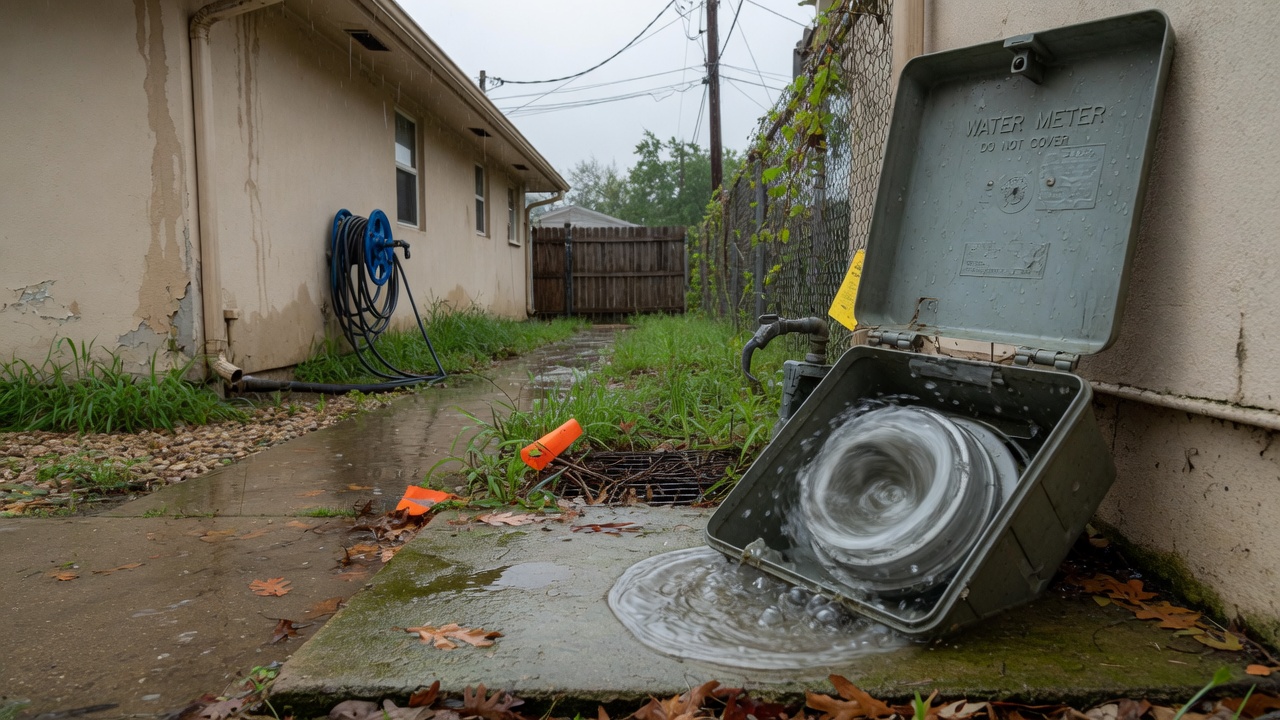
Turn the controller off so no zone is supposed to run. Turn off faucets, ice makers if you can, and the clothes washer. Go to the meter and watch the leak indicator, the small triangle or star that moves when water moves. If it is still, the spike may have been a one-time event, a filled pool, or a day when the system ran longer than you thought. If it is turning while everything is off, water is leaving the property right now.
Next, close the irrigation shutoff. On most Deer Park systems that valve sits just downstream of the backflow preventer, on the pipe that feeds only the sprinklers. Watch the meter again. If the indicator stops, the leak is on the irrigation side of that shutoff. If it keeps turning, look indoors or on the pipe between the meter and the irrigation shutoff. That single test is worth more than a week of staring at the bill. It also tells you whether you are dealing with a private repair or a stretch of pipe that may involve the City of Deer Park water side. Leaks on the utility main are a utility call. Leaks on your side of the meter are yours.
Write down the meter reading, wait twenty minutes with the irrigation shutoff closed and the house quiet, and read it again. A jump you can see in twenty minutes is not a “maybe the kids left a hose on” problem. It is a repair. If the flow is only on the irrigation side, leave that shutoff closed until someone finds the break. A closed shutoff is cheaper than another billing cycle.
What a storm actually breaks
Saturated clay shifts. A lateral that was flexed at a fitting can crack when the soil moves, especially near a driveway or a sidewalk edge where the trench was never quite as deep. Heads get packed with silt. A zone that sputters after a storm is often grit, and grit is not usually the thing that doubles a bill. The bill comes from water that runs when no zone is called, or from a zone that no longer shuts.
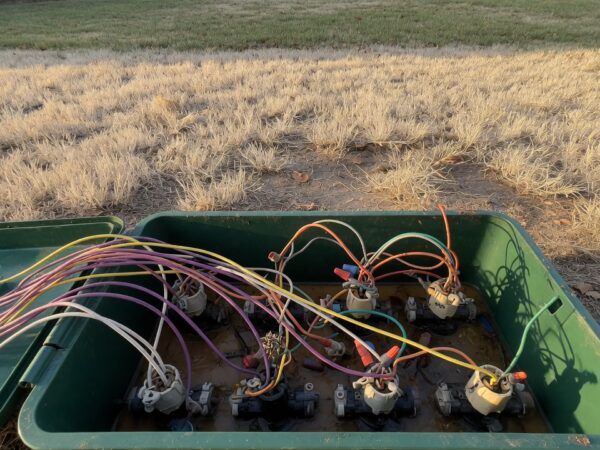
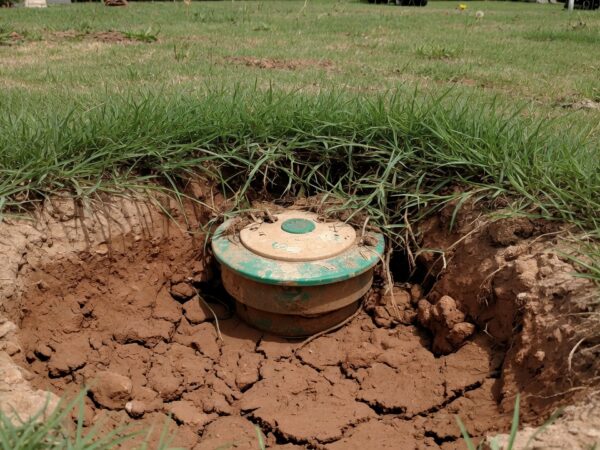
A valve that sticks open is the classic quiet spike. Debris holds the diaphragm off its seat. The controller has moved on, the other zones look normal, and one zone weeps or runs full time. You may only notice a perpetually soft spot, or you may not notice until the bill arrives. Flooded valve boxes after a hard rain make this more likely. Grit that was sitting in the box gets into the valve the next time it opens. The controller is innocent. The valve is not. If you can hear water in a box with the controller off, you are close.
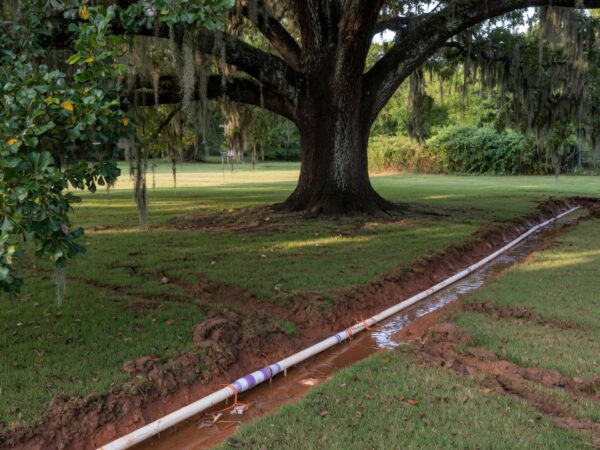
Mainline leaks are the expensive version. The mainline is pressurized whenever the irrigation shutoff is open, whether or not a zone is running. A split main does not wait for 4 a.m. It runs all day. After a storm it may show as a soft linear patch, a spot that never dries along a route from the backflow toward the valves, or water at the meter box that is not city-side. Finding that line is its own job, covered in finding a mainline leak. Do not start probing with a shovel along the whole side yard. You can turn a seep into a trench full of mud and hit other utilities sharing the easement.
Wind does a different kind of damage. A broken head that shears off at the fitting becomes an open outlet the next time that zone runs. That will spike a single cycle, not necessarily the whole month, unless the zone is running every day. The signs a sprinkler system needs repair include that open head, a zone that will not stop, and a meter that will not sit still. A storm can deliver all three, and they do not all cost the same to fix.
Deer Park conditions after a storm
Gulf storms drop a lot of water fast, then leave the soil sealed. Clay that was pounded by rain does not drain just because the sun came out on Spencer Highway. A soft lawn is not automatically a leak. Walk it a day later. A leak stays wet in a shape: a ring around a head, a line along a lateral, a valve box that refills, a patch that grows while the rest of the yard crusts over. Rain wets everything and then retreats together.
Humidity slows drying, so give yourself that day before you call a wet lawn a broken pipe. The exception is running water, a meter that turns, or a bill that already jumped. Those do not need a waiting period. SH-225 and the open streets toward Pasadena, La Porte, and Channelview take wind that tips heads and packs silt into nozzles. Packed nozzles waste water as mist, but they rarely match a true leak on the meter test. Occasional cold snaps after a wet week add another failure: a backflow or a pipe that took on water and split when the temperature dropped. If the spike showed up after a freeze rather than after thunder, look at the backflow and any exposed pipe before you reprogram the controller. City water pressure returning to a cracked backflow is not a scheduling issue.
Spike checklist
- Set the controller to off. Confirm no zone is running and no hose is open.
- Watch the meter leak indicator. Still means you are not losing water at this moment.
- Close the irrigation shutoff and watch again. Stopping means the loss is on the sprinkler side.
- If it does not stop, check toilets and the water heater, then the pipe between meter and shutoff.
- With the system off, listen at each valve box. Running water in a closed system is a stuck valve or a leak at that box.
- Look for a wet line that stays wet after the rest of the yard has crusted. Mark it. Do not dig it yet.
- Note whether the spike followed wind, standing rain, or a freeze. The likely part changes with the weather.
- Leave the irrigation shutoff closed if the meter test failed on the sprinkler side.
- Check the controller for a program that ran extra cycles during the storm because a rain sensor was unplugged or stuck.
Call while the shutoff is closed
A closed irrigation valve stops the bleeding. It does not find the split. Emergency sprinkler repair is the right call when the meter was moving fast, when a valve will not quit, or when water is surfacing near the backflow. Ordinary sprinkler repair fits a single broken head or a silted nozzle once you know the main is holding. If you are unsure which one you have, the meter test is the sort.
Deer Park Sprinkler Repair can take it from the shutoff at (281) 764-7088. Say whether the leak indicator stopped when you closed the irrigation valve, and whether any zone runs with the controller off. Those two facts decide whether the first hour is a valve, a mainline, or something that was never a sprinkler at all.