Listen for it after the zone is supposed to be finished. On a Parkwood lawn the controller has already stepped to the next station, the rotors out back have dropped, and one spray head by the front walk is still ticking. Not spraying. Ticking. A thread of water climbs the riser, runs down the cap, and disappears into grass that already looks darker than the rest of the yard. That sound is easy to ignore because the head is not broken in half. It is also how a lot of Deer Park water bills get quietly larger, one seal at a time, on soil that would rather hold a puddle than show you a hole.
A sprinkler head is a simple machine with one job that has to work in both directions. It has to open a path for water when the zone pressure arrives, and it has to close that path when the pressure leaves. Pop-up sprays do it with a spring-loaded riser and a wiper seal at the cap. Gear-driven rotors do it with a heavier retract spring and a seal around a larger turret. Either seal can weep, and the reasons are not all the same. Replacing the nozzle on a head whose body is cracked will not stop the tick. Neither will “turning the zone down” on the controller, because the controller is no longer even running that zone.
What a seal is supposed to do when the zone ends
When the valve closes, the spring should seat the riser and the wiper should stop the head from venting. A short weep at the lowest head can be the lateral draining. Lots off Spencer Highway and near Center Street are close to flat, so a head that weeps for ten minutes is not the low end of the zone. There is not enough elevation in that pipe to explain it.
A head check valve matters on a slope, where it keeps the low head from spitting the whole lateral. On a level St. Augustine lawn a persistent drip is the seal, the cap, or pressure that never left the pipe. One wet head is a head problem. A whole zone that glistens after shutdown is a valve problem.
The three leaks that look alike from the sidewalk
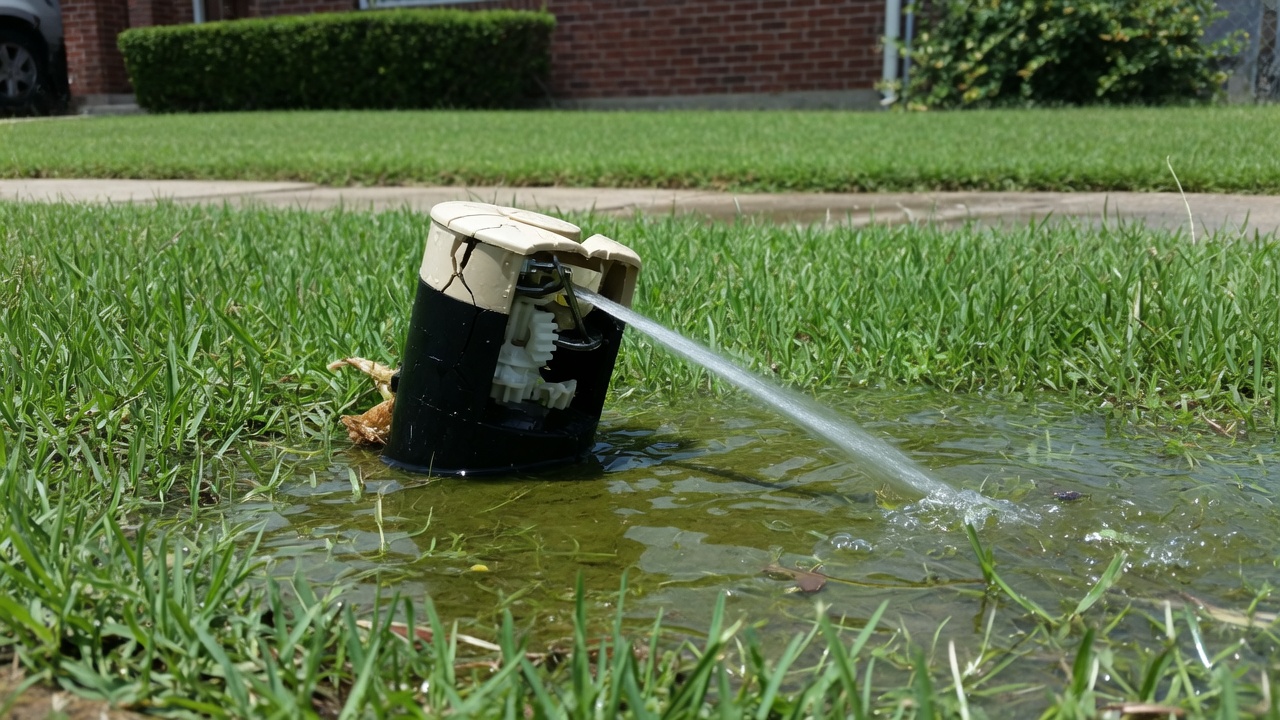
A worn wiper still pops and still looks fine while the zone runs, then seeps, often with a dark collar of soil. A cracked body or split cap, usually from a mower or a sunken head, may leak only when the riser is up. A loose nozzle or a missing screen lets water out around the threads and lets grit in so the riser never fully drops. A riser left standing gets finished by the next mowing.
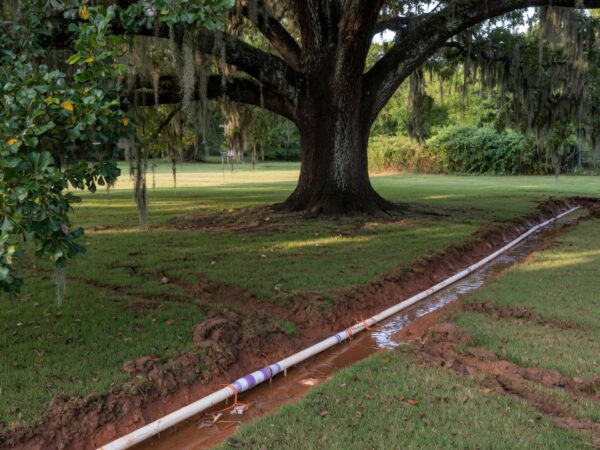
If the soil is soupy in a line that does not center on the head, the head is only where water found daylight. A circle tight around the cap is the head. A streak is the pipe.
Mowers, edgers, and the heads that sit too low
St. Augustine in a Deer Park summer is not a slow grower. It can creep over a head between mowing days, and once the canopy covers the cap the head is spraying from inside the turf. Coverage collapses, the homeowner lengthens the zone to compensate, and the extra minutes drive more water into a seal that is now packed with wet clippings. Raising the head back to grade, so the cap sits at soil level and the nozzle clears the cut height, stops that cycle. It is also the repair that prevents the next cracked cap. A head left half an inch low will be hit. A head left an inch high will be scalped and will trip anyone walking the parkway at night.
An edger string nicks the riser while it is down, and the nick leaks sideways at the concrete the next time the zone runs. If the same spot breaks every season, set the head at grade so the mower and the string miss it.
How Deer Park clay turns a drip into a bog
Clay along East Boulevard, through Parkwood, and across a lot of the older Deer Park grid seals at the surface once it is wet. A weeping head does not “water that little circle nicely.” The water leaves the cap, hits a sealed crust, and sheets sideways until it finds a crack, a gopher-free depression, or the expansion joint of the walk. That is why a leak you would call minor in a sandy soil shows up here as a slick sidewalk and a yellow patch. The volume is not always huge. The soil simply refuses to take it in place, so all of it reports to the lowest inch of the yard.
Humidity does not create a stream from a cap, and it does not keep one head soggy while the heads six feet away are dry by noon. A finger that finds free water beside the cap, with the rest of the zone merely damp, means the clay is parking a leak in place.
There is a related problem when the head itself has sunk. Clay shrinks in a dry spell and swells in a wet one, and heads that were set flush in spring can sit in a pocket by August. The pocket holds the leak, mosquitoes included, and the spray hits the rim of the pocket instead of the lawn. That combination, a low head plus a weep, is common enough that it has its own walk-through in sunk heads on Deer Park clay. Fixing the seal without resetting the height only solves half of what you see.
A simple way to separate a bad head from a bad valve
- Set the controller to run only the zone in question, and stand where you can see every head, not just the noisy one.
- Confirm the other heads pop fully and retract when you advance off that zone. If they all keep weeping, stop and think valve, not nozzle.
- On the suspect head, note whether water comes from the nozzle, from under the cap, or from a crack in the body while the riser is up.
- After the zone shuts off, time the drip. A few seconds can be drainage. Several minutes on a flat lot means pressure or a seal that is not closing.
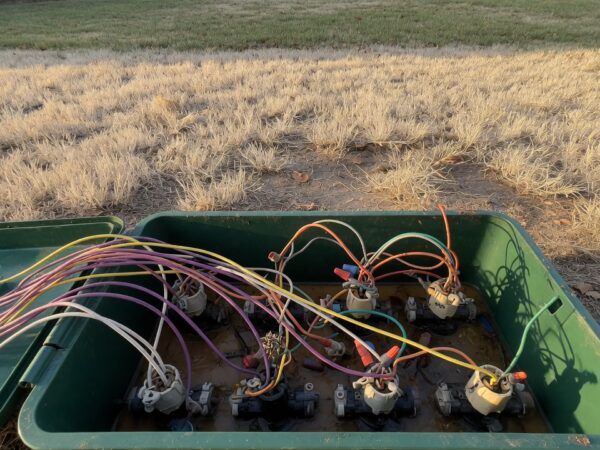
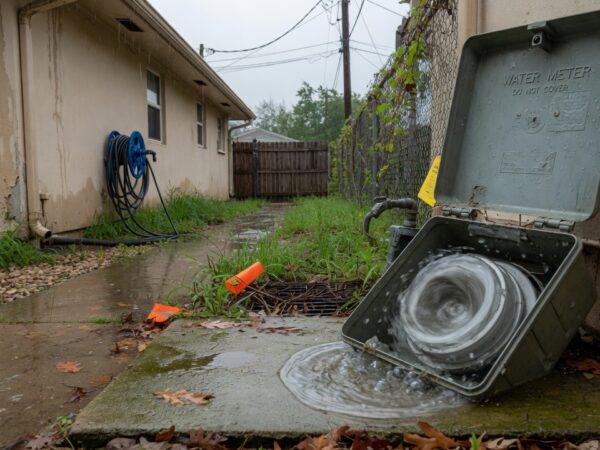
- With the system idle, look at the meter. A head leak that only happens under zone pressure will not move the meter when the valve is truly closed. A leak that moves the meter with the controller off is upstream of the heads.
- Photograph the pattern while it runs so the replacement nozzle can match the arc you actually need, not the arc molded on a random cap.
That sequence prevents a new spray head on a zone whose valve is the real leak, and a valve rebuild on a zone that only had one nicked cap. Match the inlet, the pop-up height, and the nozzle family already on that zone. A mismatched nozzle soaks one corner and starves another.
Why capping the head is not the repair
Capping a head stops the visible drip and dead-ends a lateral that was sized for water to leave. The extra pressure shows up as mist at the next head, or it splits an old saddle. If that corner is now mulch, remove the head, plug the pipe properly, and rebalance the remaining nozzles. A twist-on cap is not that repair.
Hand tight, plus a short nip while you hold the head so the swing joint does not twist, is the limit. Grit in the threads is what cut the last seal. When several heads weep or spray the gutter, fix the zone in one pass. That visit is ordinary sprinkler repair, and it should include the other failure modes in five signs the system needs repair. If you are not sure whether you are hearing a seal or a valve, call (281) 764-7088 and say whether the rest of the zone is dry. The broader list of what gets checked on that visit is on the services page.