The first clue on a Deer Park lawn is rarely a geyser in the flower bed. It is quieter than that. You walk out along a Spencer Highway front yard after the night cycle and the sidewalk is still dark, while the St. Augustine ten feet in from the curb looks dusty. Or the parkway stays slick until lunch and the grass along the gutter has gone yellow from standing water. Harris County clay in this part of town does not shrug off a small leak the way a sandy lot would. Water sits, sheets across the surface, and finds the street. Those patterns are the system talking. Five of them show up again and again, and each one points at a different part of the irrigation rather than at “the grass having a bad week.”
1. Water on the ground when every zone is off
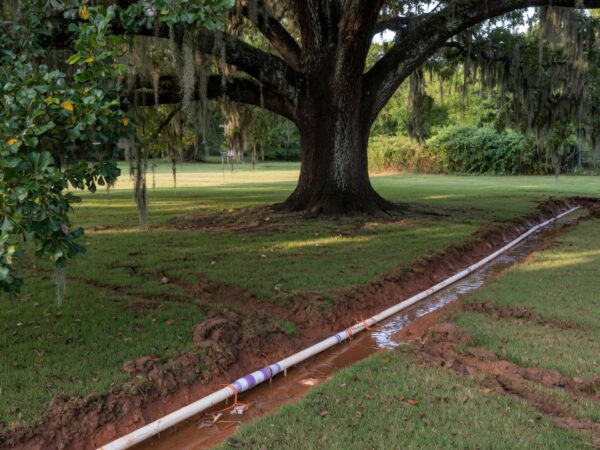
Standing water with the controller off is not last night’s cycle still drying. A wet ring around one head is often a worn seal or a cracked body. A soft line between the valve box and the first head is more often a lateral. Swapping a head will not fix a split pipe under a driveway sleeve.
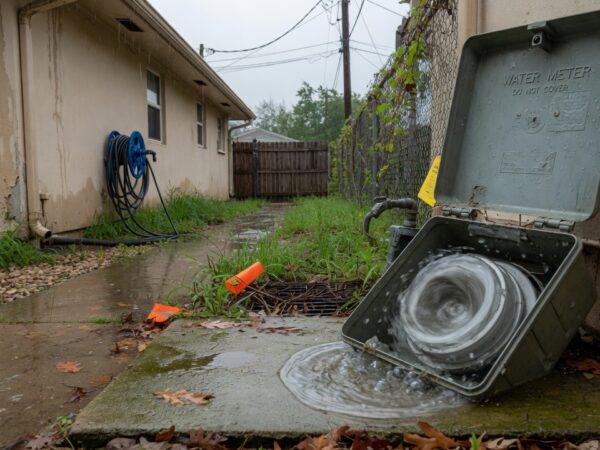
Turn the controller fully off and walk the yard in the late afternoon. If a wet spot is still growing, close the irrigation shutoff at the backflow near the meter. Leaving it open only measures how fast the clay can carry water away from the break.
2. Dry stripes beside soaked stripes
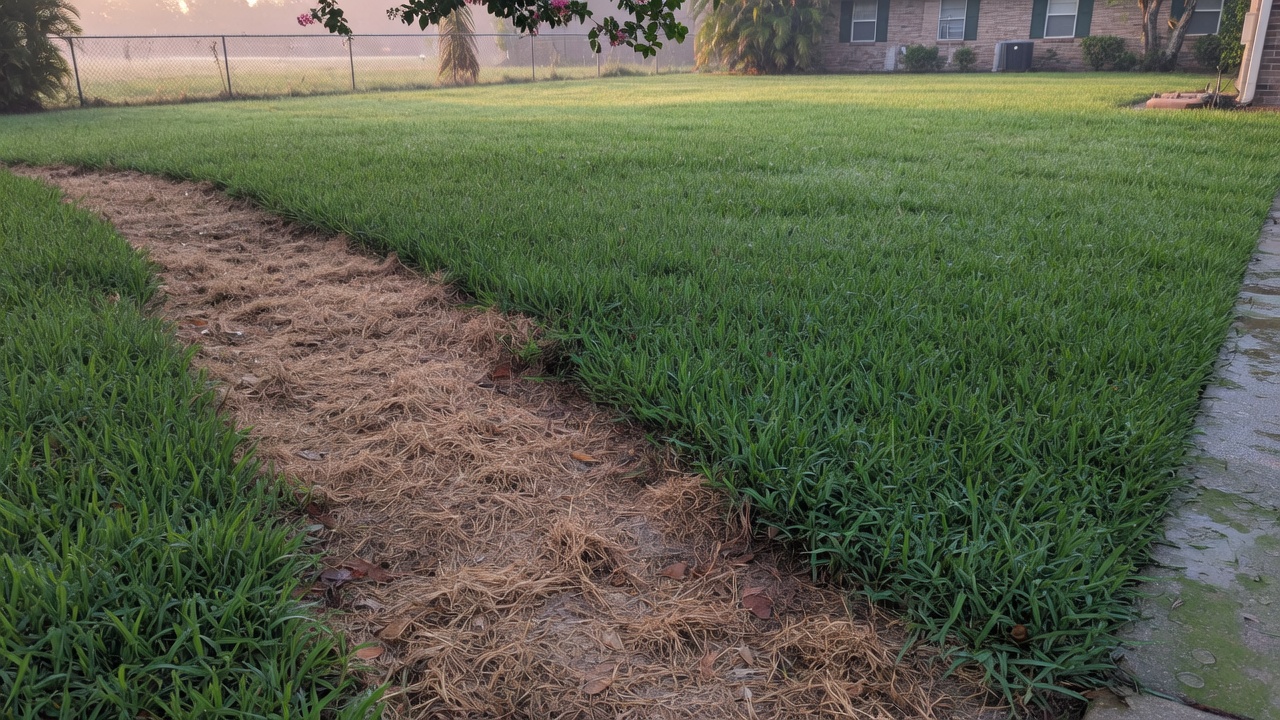
St. Augustine hides trouble until it cannot. The canopy stays green while roots in a missed arc go shallow, and then a pale band shows up that follows the reach of one rotor. Sometimes the pattern is a donut of dry grass around a spray head whose nozzle is packed with fine grit. Clay makes the contrast sharper. Water that lands too fast cannot soak, so it runs to the low side of the yard. That side floods. The side that is only a few inches higher stays hard, even though both sides are on the same zone and the same timer.
Run the zone and watch one head at a time. A head spraying the fence or the street, or one mowed flat until it only dribbles, is not a watering. It is a leak or a bad aim with a nozzle still attached.
3. A bill that jumped without a longer schedule
City of Deer Park water is metered. If nobody lengthened the schedule, a sudden jump usually means water is leaving outside the minutes you think you are running. On clay it can follow the old trench to the gutter and never leave a puddle. Compare the bill with weeks you were away. Extra use then was not just the heat.
After a Gulf rain, a valve that was barely sealing can stick open while you assume the standing water is rainfall. That pattern is covered in a water bill that spikes after a storm. Shut the irrigation valve, confirm no fixture is running, and watch the meter. If it stops, the house plumbing is not the source.
4. Heads that hiss, fog, or throw a single stream
A spray head should come up clean and hold a defined fan. A hiss at the cap, a fog that drifts across the sidewalk, or one pencil stream shooting past the rest of the pattern means the nozzle, the filter screen under it, or the seal is finished. Rotors that stall halfway through their arc, stutter, or spin too fast are putting down the wrong amount of water for the minutes you programmed. On one zone, a fast rotor and a slow rotor do not average out. The fast head puddles its corner. The slow head leaves a dry wedge that you will notice only after the St. Augustine thins.
If several heads on one zone start misting together, check pressure before you buy nozzles. High pressure chews seals. Low pressure, from a partly open valve or a crushed lateral, makes heads dribble. A real sprinkler repair checks the zone, not only the plastic above the grass.
5. A zone that will not shut off
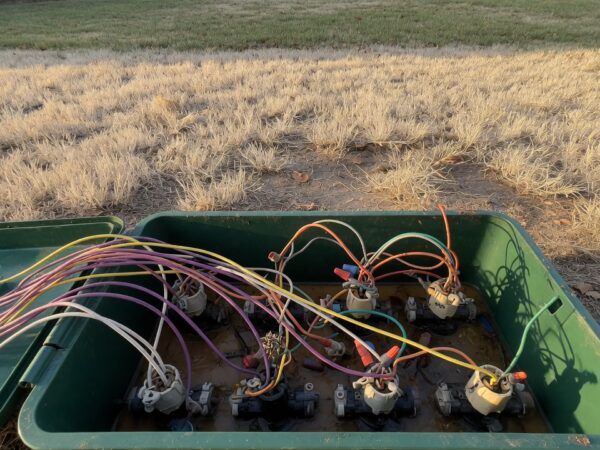
This one does not wait for a convenient afternoon. A zone that keeps running after the controller has moved on, or that runs with the dial set to off, is a valve problem until something else is proven. Debris under the diaphragm, a torn diaphragm, a solenoid plunger stuck up, or a manual bleed screw left open will empty a surprising volume onto a flat Deer Park lot. The grass cannot drink it at that rate. The clay seals. The water goes to the street. The city’s own drought rules treat a controllable leak as something the customer is expected to stop, not something to watch for a week.
If you can open the box safely, the bleed screw should be seated and the solenoid should not still be buzzing. Close the irrigation supply if water is leaving the property, and leave the controller powered. Solenoids, diaphragms, and the meter test are covered in a Deer Park zone that will not shut off.
Why Deer Park clay hides a leak longer than the lawn admits
Soils through Deer Park, including Parkwood, Spencerview, the blocks off Center Street, and yards toward the San Jacinto College area, are often heavy clay. Clay swells when it is wet and seals when water is applied faster than it can infiltrate. That is useful once water actually reaches the root zone of St. Augustine. It is a poor alarm. A small, steady leak can travel along the pipe trench, which is the loosest soil in the yard, and daylight two lots away or not at all. By the time the lawn squishes underfoot, the lateral may have been losing water for several full cycles.
July humidity will not explain a sidewalk that never dries. A strip that stays wet also invites brown patch on St. Augustine once the nights stay warm. A head that only drips is working against the lawn even before the bill spikes.
Pasadena, La Porte, and Channelview sit on similar clay, but the meter and the drought stage are City of Deer Park’s. Stop the leak, then make sure the controller is not scheduling water outside the hours currently in effect.
What to write down before you call
- Which zone number is involved, and what part of the yard that zone covers, including front, parkway, or back.
- Whether water is present with the controller switched off, not merely between start times.
- Whether the meter moves when every indoor fixture is off and the irrigation shutoff is open, and whether it stops when that shutoff is closed.
- Daylight photos of the head, the valve box, and the wet area, taken before anyone digs.
- How long the symptom has been there, and whether it started after a mow, a fence project, a freeze, or a hard rain.
- Any head, nozzle, or valve that was replaced recently and never quite stopped weeping.
That list keeps the visit from turning into a lap around the house guessing which zone is which. It also separates a routine visit from a same-day shutoff. Water entering the street, a zone that cannot be stopped from the controller, or a backflow relief valve that is discharging continuously belongs on the urgent side of the schedule.
Fix it this week, or stop it today
A clogged nozzle can wait for a normal visit. A mainline leak, a valve stuck open, or a backflow that will not stop dumping should not. Lots along SH-225 and East Boulevard are not large, and a stuck zone can move thousands of gallons overnight. Broken heads and split laterals are everyday sprinkler repair. When the water will not stop, treat it as emergency sprinkler repair and call (281) 764-7088. On this clay the lawn announces a small leak with a dark sidewalk or a meter that will not sit still, not with a fountain.