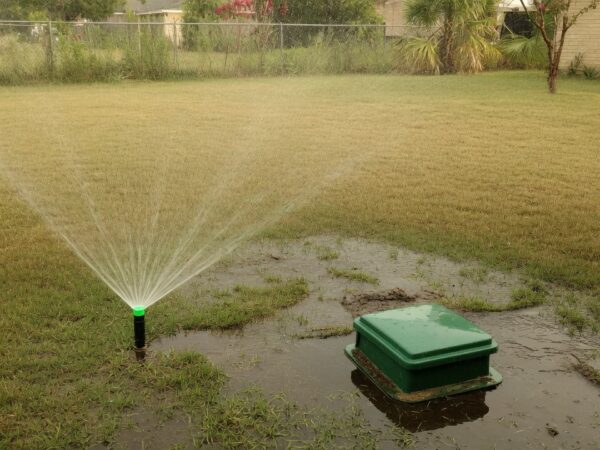
Lift the green lid and the box is a pond. There is no spray in the yard, the controller is idle, and the water sits at the rim with a skim of silt. That water is a clue with three common sources, and bailing it out without naming the source just gives you the same pond tomorrow.
A valve box is a sump. It collects whatever arrives: a valve that will not seal, a fitting leaking under pressure, a lateral that dumps back after a cycle, or groundwater the clay will not let go of. The repair is different in each case. Pumping the box and adding gravel treats none of them. It only hides the water until the lid floats.
Empty it, then watch what comes back
Turn the controller off so no zone is supposed to run. Close the irrigation shutoff, the valve that feeds only the sprinkler system, not the valve that kills water to the house. Bail or pump the box until you can see the valve bodies, the wire splices, and the pipe entering and leaving. Then wait. Dirty water and a mud line on the lid tell you the box has been full for a while. Clear water that returns with a hiss is pressure, not rain.
If the box stays empty with the shutoff closed, and fills again after you open that shutoff while every zone stays off, something on the constant-pressure side is passing water into the box. That is usually a valve that does not seat, a weep at a solenoid, or a crack in the main or the manifold inside the box. If the box stays dry until a particular zone runs, and then takes on water, look at that zone’s outlet fittings, the bonnet screws, and low-head drainage from the lowest head. If the box refills with the irrigation shutoff closed, the controller off, and no hiss at all, you are probably looking at groundwater. Mark the time it takes to return. A leak under pressure comes back faster than a slow seep through clay.
What a diaphragm leak looks like
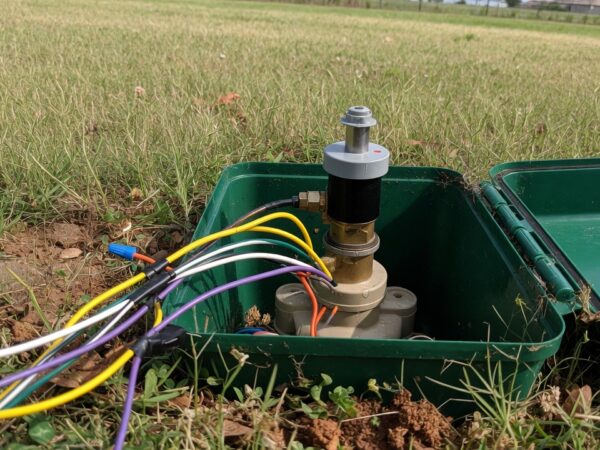
Most residential zone valves are diaphragm valves. City pressure holds a rubber diaphragm closed. The solenoid, when energized, vents a small port so pressure above the diaphragm drops and the valve opens. Grit under the diaphragm, a torn edge, a stuck plunger, an open bleed screw, or a flow-control stem with a bad seal will let water by even when the solenoid is off. You may hear a faint hiss, see turbulence at the valve, or watch the meter move while the yard looks dry. The box fills because that bypass has to go somewhere, and a loose union or a cracked bonnet gives it a door.
Cleaning is worth doing once, not as a hobby. Shut the water off, open the bonnet, and rinse the diaphragm and the seat. Look for a nick, a stretched hole at the center, or grit embedded in the rubber. A wrinkled or stiff diaphragm gets replaced, not flipped over and hoped at. Check that the solenoid plunger moves freely and that the bleed screw and flow control are actually closed. Then restore pressure with the controller still off. A valve that passes again after a clean seat needs a new diaphragm or a new valve, not another rinse. Standing water also cooks the wire nuts. Even after the leak stops, open the splices. Green copper and a white crust mean the connection has been underwater, and the next symptom will be a zone that will not open. That repair path is covered under valve repair.
Groundwater is real here, and it mimics a leak
Deer Park sits on tight clay, and parts of the city, especially lower ground toward the ship channel and toward Channelview, carry a high water table after prolonged rain. A valve box without a watertight bottom becomes a well. The water is muddy, it rises with no sound, and closing the irrigation shutoff does not stop it. Neighboring boxes and even an empty drain inlet may show the same level. Read the difference alongside high water table behavior around Channelview before you condemn a valve that is only sitting in the water the soil delivered.
Groundwater still corrodes solenoids and rots splices. Raise a sunken box so the lid sits at grade. Do not stack it above the lawn. A tall box is a mower target. If the box sits in a swale, the longer fix is grading or a new valve location, not a bigger lid. Use the shutoff test every time. The day water returns with the shutoff open and the zones off, you have a leak on top of the soil water, and only the leak will keep coming after the yard dries.
When a full box is an emergency
Treat it as urgent if the meter is spinning with the system off, if water is boiling up through the soil outside the box, if the foundation line or the sidewalk is going soft, or if a zone will not shut off and is still running. A valve stuck open can move a lot of water into clay that then runs toward the slab or the street. Shut the irrigation isolation valve, leave the controller off, and follow the shutoff steps in what to do when a valve will not shut off. If that isolation valve will not close either, move to emergency sprinkler repair rather than digging beside a live main.
Kill the controller before you reach into a flooded box. Do not enlarge the hole until you know where the pipes enter. Most manifolds sit just under the lid, and a wild shovel stroke turns a weep into a broken main.
Deer Park conditions: rain loads the soil, then the box tells on the valve
Humid summers and slow-draining clay mean a box can stay wet for days after a storm even when every valve is sound. That trains people to ignore the lid. Then a diaphragm fails in July and the extra water is blamed on “just the soil” until the bill arrives or the beds along Center Street turn into a bog. After heavy rain, give groundwater a day and retest with the shutoff closed. If the level is still climbing and the meter is moving, it is no longer the storm.
Older yards between Spencer Highway and the industrial corridor often have more than one box: a shutoff box near the meter, a manifold box in the side yard, and sometimes a lonely valve added for a later bed. Fill each one in your notes before you pick a part. Water in the shutoff box, with the zone boxes dry, points upstream of the valves. Water in only one zone box points at that valve or its fittings. Water in every low box after a Gulf rain, with a still meter, points at the soil. The pattern is the diagnosis. A single wet lid is not.
Checklist: a box that will not stay empty
- Controller off. Confirm no zone is calling.
- Close the irrigation shutoff only. Confirm the house still has water.
- Bail the box until you can see valves, splices, and pipe.
- Wait. Note whether water returns with the shutoff closed.
- Open the shutoff, zones still off. If water returns, you have a pressure-side leak.
- Run one zone at a time only after the box is dry enough to see which fitting weeps.
- Rinse a suspect diaphragm once. Replace it if the rubber is nicked, stiff, or torn.
- Check solenoid plungers, bleed screws, and flow controls. Leave them seated.
- Redo any splice that was underwater. Green wire is not a reliable connection.
- If the meter moves with everything off, or a zone will not stop, shut the system down and call.
A box you empty every Saturday is not a maintenance routine. It is an open leak or a sump, and those two outcomes need different work. If the shutoff test says the valve is passing, or you cannot get the box dry enough to see, call Deer Park Sprinkler Repair at (281) 764-7088. Say whether the meter moves and whether the water comes back with the shutoff closed. That is enough to show up with the right parts instead of another pump.