One zone is dead and the rest of the Deer Park system behaves. The controller clicks to that station, the display looks normal, and the lawn stays dry. Next station, water. The temptation is to replace the solenoid or the whole valve. Sometimes that is right. Often the solenoid is fine and the wire that was supposed to energize it is open, shorted, or chewed through between the controller and the box. A dead zone with living neighbors is an electrical problem until a simple test says otherwise.
The wire is low-voltage cable, typically about 24 volts AC when that station is on. It is not house power, but a wrong assumption in a wet valve box can cook a controller fuse. The safe first step is a water test. Use a meter only if you are comfortable with one. If you are not, the water test is enough to make a useful call.
Separate a dead valve from a dead wire
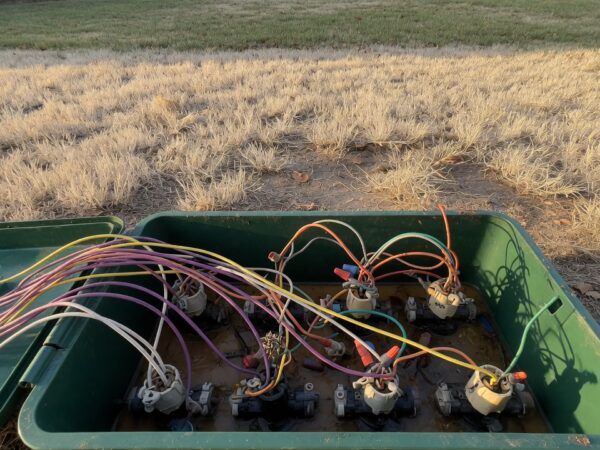
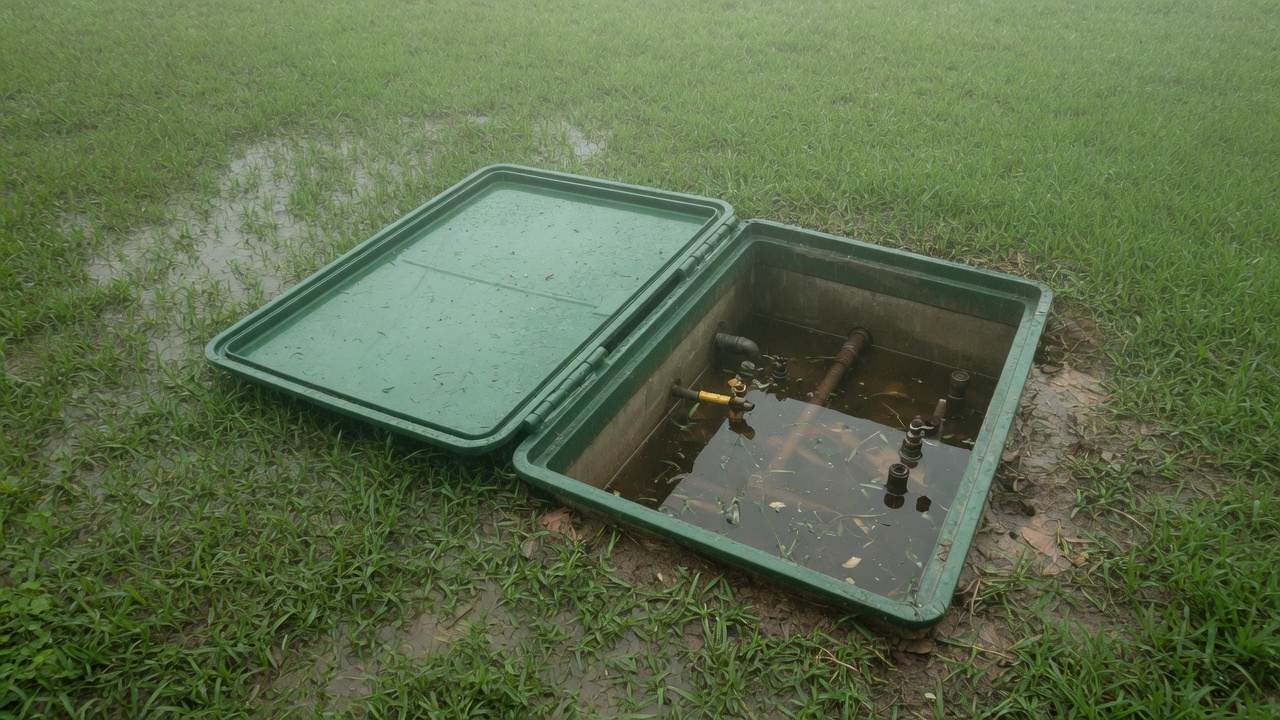
Find the valve for the silent zone. Most Deer Park boxes hold two or three valves in a rectangle sunk at grade, often near the side fence or the back corner of the house. Turn the controller off. Open the bleed screw or flip the solenoid a quarter turn to the manual position, whichever that valve uses. You are letting the valve open without electricity. If the zone then runs, water is present, the diaphragm can move, and the pipe is not the thing keeping this station dark. The failure is in the solenoid, the wire, or the controller terminal. Close the manual opening before you continue so the zone does not run all afternoon.
If the zone will not run even on manual, stop thinking about wire. A valve that cannot be forced open has a mechanical problem: a failed diaphragm, a seized plunger, no water because a master valve or shutoff is closed, or a capped outlet. Chewed wire does not block a manual bleed. This distinction saves a Saturday of pulling cable when the repair is a valve. When manual works and the controller does not, move to the electrical side, which is the territory of a zone that will not turn on.
Listen while the controller calls that station. A healthy solenoid makes a small click or buzz at the valve. Silence at the valve and a normal display at the controller usually means voltage is not arriving. A click with no water, after a successful manual test, points back at a plunger that moves by hand and sticks when powered, which is a solenoid or debris issue rather than a long break in the yard. The ohm check below separates those.
What the meter is telling you
A typical residential 24-volt solenoid reads somewhere in a 20 to 60 ohm window. Brands differ. Some Hunter coils sit in the mid-20s. Some Rain Bird coils sit higher, nearer 50. Do not treat one number as a court verdict. Compare the dead station with a station that works on the same controller. Similar readings mean the coil and the wire path are at least continuous. A reading that will not settle, or a meter that shows an open line, means the circuit is broken: chewed wire, a failed coil, or a splice that finally corroded apart. A reading near zero, or under about 10 ohms, means a short. Shorts blow controller fuses and sometimes take the common wire down with them so that more than one zone misbehaves.
You can read ohms at the controller, with that station wire and the common lifted off the terminals, or at the valve with the solenoid unplugged from the field wires. The second reading is the coil alone. If the coil is in the healthy window and the reading from the controller is open, the wire run is the open part. If the coil itself is open or shorted, replacing the solenoid is the repair, and the wire can stay. That swap is described in replacing a sprinkler solenoid. Replacing a good solenoid on a broken wire changes nothing except the receipt.
Readings well above that window are the miserable middle. The zone works on a dry week and fails after rain. A bare twist in vinyl tape is not a splice in damp Deer Park soil. If you redo a joint you can see, use a grease-filled waterproof connector made for irrigation.
Where the chew happens
Rodents like the place the cable comes up into a box, the slack loop someone left under a lid, and any run that follows a fence line instead of a trench deep enough to ignore. Dogs dig the same corners. Edgers nick wire where it was pulled too shallow under the sidewalk joint. None of these look dramatic from the kitchen window. You find them when you open the box and see bright copper, a frayed jacket, or a connector full of mud.
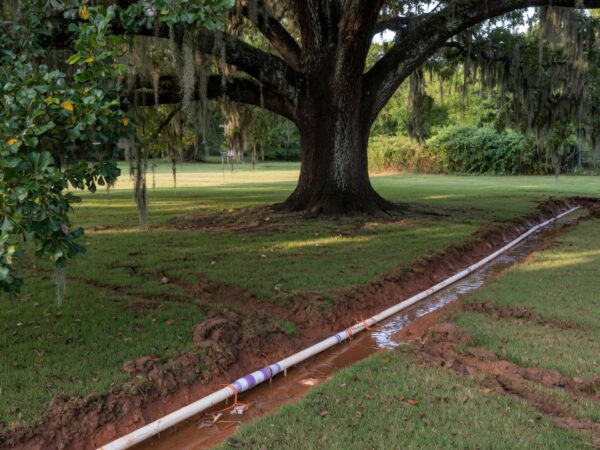
A healthy manual bleed can still be a break you cannot see, ten feet toward the house. Tone the wire. Random trenching can hit the lateral beside it. If the coil tests fine in the box and the controller reading is open, the break is in between. Guessing with a shovel turns a wiring repair into a pipe repair.
Deer Park conditions that ruin a splice
Local clay holds moisture against every nick in the jacket. A scrape that would sit harmless in sandy soil turns green and open here. Gulf humidity and wet valve boxes after a storm push the same corrosion even when the chew was small. The box lid on a low side yard near Spencer Highway or along a swale toward East Boulevard may sit under water for a day. That is enough to finish a tape splice. Occasional freezes add a different crack. Water that wicked into a nicked jacket expands, the copper breaks, and a zone that survived summer dies on the first cold morning.
Yards nearer open ground, the SH-225 corridor, and the less fenced stretches toward Channelview and La Porte see more chewing than a tight interior lot, but a dog in Parkwood can do the same work in an evening. St. Augustine hides the scar until that station is the one you need in July. A shorted chew does not always stay a one-zone problem. If several zones died together, check the fuse and the common before you condemn five solenoids.
Dead-zone checklist
- Confirm the other zones run. A dark controller is not a chewed single wire.
- Open the valve manually with the controller off. Water means the pipe and diaphragm can work.
- No water on manual means stop the wire hunt and look at the valve, the shutoff, or a master valve.
- If manual works, listen for a click at the solenoid while that station is powered.
- If you use a meter, compare ohms on the dead station with a working station. Expect a healthy coil in a broad 20 to 60 ohm range, and trust the comparison.
- An open reading at the controller and a healthy coil at the valve means the wire run is broken.
- A short near zero ohms means a crossed pair or a burnt coil. Check the controller fuse before you keep testing.
- Inspect the box for chewed jackets and muddy twists. Redo any joint you touch with a waterproof connector.
- Do not trench the yard blindly. If the break is not in the box, locate the wire or call for that locate.
Fix the circuit you actually have
A visible chew in the box, a solenoid that tests open, or a valve that will not bleed are three different repairs. Valve repair covers the mechanical body and diaphragm. Controller repair covers a dead terminal, a blown fuse, or a station that never sends voltage even on a test wire at the wall. The cable in the ground sits between those two. Replacing both the controller and the valve without checking the wire is how the zone stays dead.
Deer Park Sprinkler Repair can sort the click, the ohms, and the chew at (281) 764-7088. Say whether the zone runs on manual and whether any other station died with it. If the fuse is blown, say that too. A dead zone is specific. The repair should be just as specific.