The controller clicks, the display shows zone three, and the yard stays dry. Next door, zone two just rattled the spray heads and shut down on time. A zone that will not turn on is a sorting problem. Water, wire, and the clock fail in different places, and Deer Park yards give you all three: older multi-strand wire along East Boulevard, valve boxes that stay wet in clay, and controllers that have been reprogrammed by every tenant since the house was built.
Start with what you can hear and see before anyone pulls a solenoid. If the controller does not click and does not show the zone running, you may not have an irrigation failure at all. You may have a program that skipped the day, a rain sensor holding the common open, or a dead display. If it clicks and advances and only one zone is silent, the clock is at least trying. That narrows the search to that station’s wire, its solenoid, or a valve that has no water reaching it.
Separate the controller from the valve
Conventional residential zones are switched with 24 volts AC. The controller sends that voltage down a station wire, through the solenoid, and back on the common. The solenoid only has to lift a small plunger. Water pressure does the rest of the work of opening the diaphragm. No voltage, no click at the valve, no water. Voltage present and still no water, and you have moved from an electrical problem to a mechanical one.
At the controller, a station that is supposed to be on should show roughly the mid-20s in volts AC between that station terminal and the common. Exact numbers depend on the transformer and how long the wire run is. What matters is the contrast. A healthy station reads in that range. A dead output reads nothing. If every station is dead, suspect the transformer, a tripped outlet, or a sensor that has opened the common, and read what a tripped GFCI does to a sprinkler controller before you condemn the panel. Outdoor outlets on garages in this climate trip, get reset, and trip again when the cover no longer sheds rain.
If the station terminal has voltage and the valve in the yard does not, the wire between them is open or the splice is no longer a splice. If the valve has the same voltage and does not open, the solenoid coil or the valve itself is next. That second case is the one covered in replacing a sprinkler solenoid without throwing the whole valve away.
How wiring actually fails in these yards
The field wire is direct-burial cable, not indoor lamp cord, but it is still just copper and plastic in soil that moves. A shovel looking for a sprinkler head, an edger cutting a new bed, a fence post, or a landscape flag is enough to nick one conductor. One cut station wire kills one zone. A cut common kills every zone, because every solenoid shares the path home. That single fact sorts a lot of “the whole system died” calls from “zone four died.”
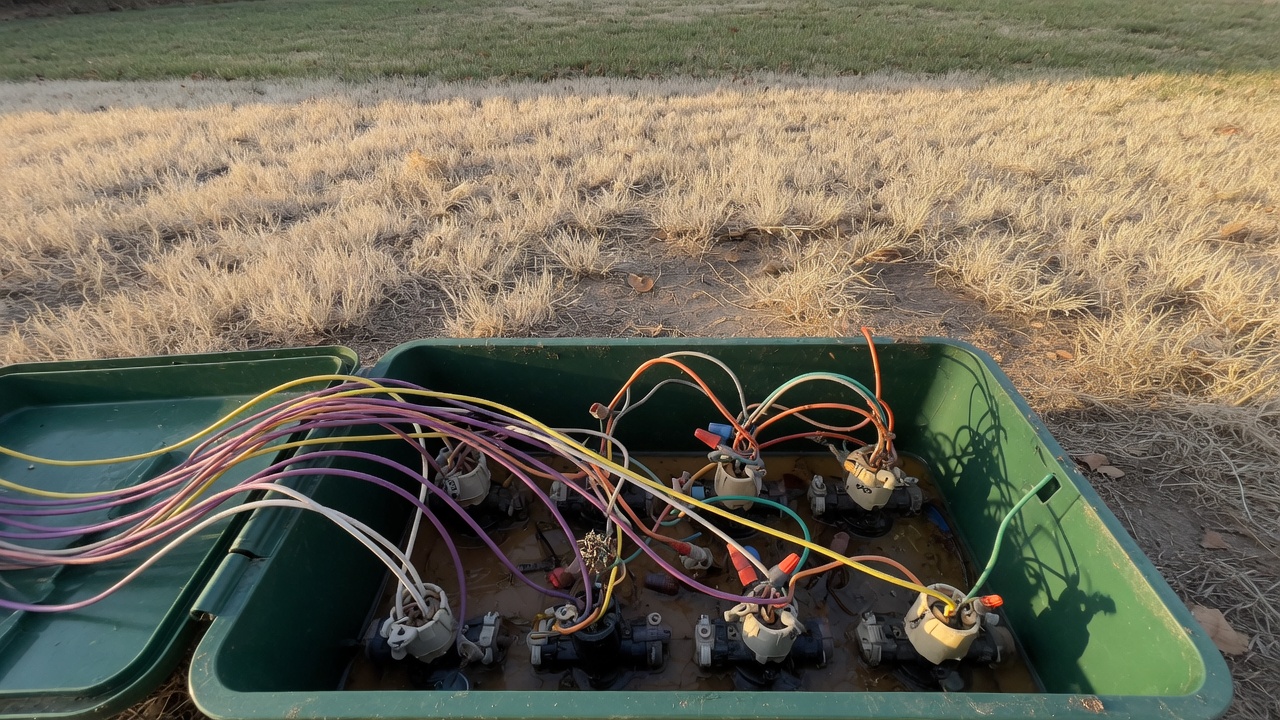
Splices are the other weak point. The original installer may have used waterproof connectors. The repair after a fence often did not. A household wire nut wrapped in electrical tape holds for a season in dry soil and turns to green dust in a Deer Park valve box that spends spring full of water. Corrosion raises resistance until the solenoid no longer gets a clean 24 volts, and the zone gets weak, buzzes, or simply stops. Pulling the connector apart and finding white powder is the diagnosis.
Two-wire and decoder systems show up on larger lots and on some commercial clocks, and they do not behave like a bundle of station wires. A decoder that has lost its address, or a latching solenoid wired backward, will not be fixed by the multimeter habits that work on a conventional common. Do not swap those parts with a standard 24-volt coil. Polarity matters on latching solenoids. It does not matter on an ordinary AC solenoid.
Deer Park site conditions that eat a zone wire
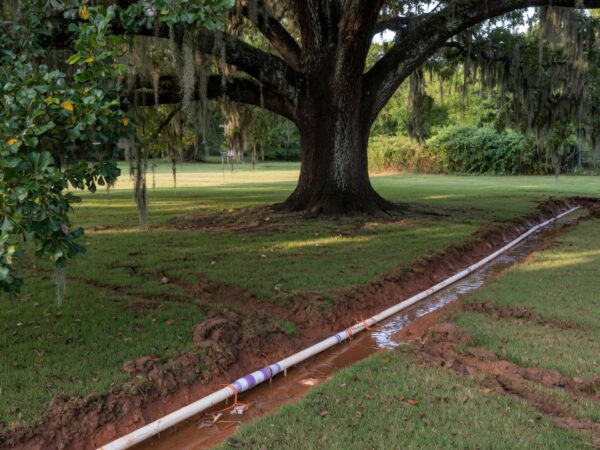
Clay is the reason a nick becomes a mystery. The soil closes over a shallow wire, holds moisture against a cracked jacket, and then shrinks in August so the wire is tugged at the splice. Older homes near Center Street and along East Boulevard often have wire runs that were extended, not replaced, when a bed or a pool went in. The failure is at the newest joint, not at the controller that still clicks faithfully.
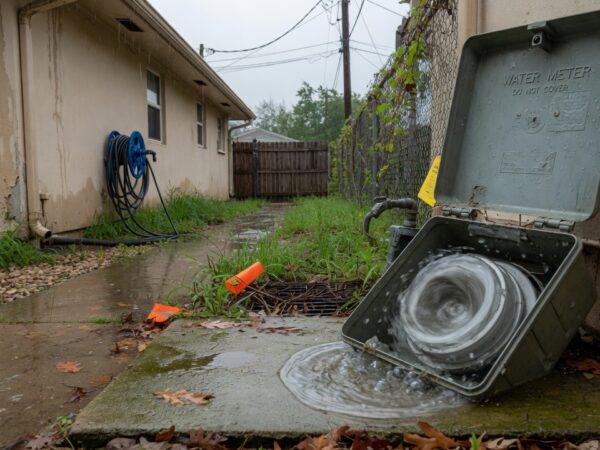
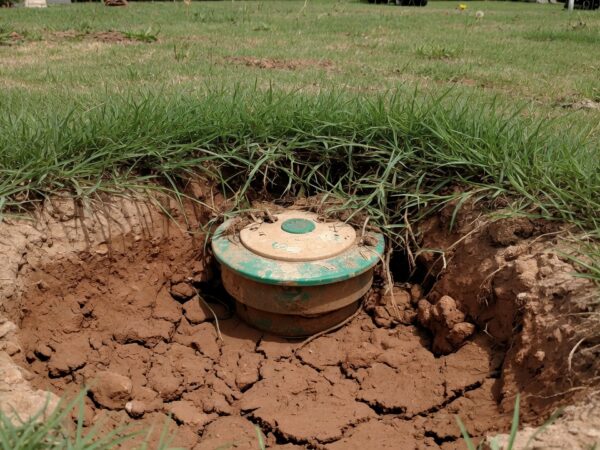
Valve boxes in Parkwood and Spencerview sit at the low edge of a lot more often than people remember. They fill after a Gulf rain, the connectors sit underwater, and zone three fails two weeks later when the box looks dry again. The timing fools everyone into blaming the program they just changed for summer. Open the box anyway.
Along Spencer Highway and closer to SH-225, commercial and corner-lot systems add conduit that ends three feet short of the valve. The last jump is bare wire in fill dirt, and it is the piece that gets cut when a sign or a seasonal-color bed is installed. Residential or not, the lesson is the same: the zone that died after somebody else worked in the yard is a wire zone until proven otherwise.
Occasional hard freezes split valve bonnets and also crack wire jackets that were already brittle. The symptom waits for the first hot week, when that zone is asked to run and the copper is open inside an intact-looking cable. If several zones failed together after a freeze, look at the common and at the manifold before you replace the controller.
Checklist for a zone that stays off
- Read the controller. Confirm the zone is scheduled, the time is right, and rain-sensor bypass is not hiding a soaked sensor.
- Run the zone manually from the panel. A click with no water is a different case from no click at all.
- Check the outlet and the GFCI before you open the clock. Reset only if the cover is dry and the trip does not repeat.
- If you can measure voltage safely, compare the dead station with a station that works, at the terminal and then at the valve.
- Open the valve box. Look for a manual bleed that has been left cracked, a flow control screwed shut, or a master valve upstream that never opened.
- Inspect splices for corrosion, especially if the box was full of water this spring.
- Ask what was dug, planted, or fenced since the zone last ran. Follow that trench.
- If voltage is present at the solenoid and the plunger does not move, stop and treat it as a solenoid or valve repair.
- If no station has voltage, stop chasing individual valves and look at the transformer, the sensor, and the common.
- Do not keep swapping programs. A clock that advances correctly is not the part that failed.
Where valve work starts and clock work stops
A single zone with voltage at a dead coil is valve repair. A panel that sends no voltage on a terminal, reboots when a zone starts, or runs zones that were never programmed is controller repair. Mixing those tickets is how a working valve gets replaced and the zone still sits dark. The wire in between is its own job: locate, splice with a connector rated to live underground, and test the zone before the trench is closed.
If zone three clicks and never waters, call Deer Park Sprinkler Repair at (281) 764-7088. We trace station wires and commons on Deer Park systems, from older East Boulevard bundles to newer lots off Spencer Highway, and we do not replace the clock until the voltage says the clock is the part that quit.